Heavy lift and logistics for the Australian wind fleet
Nothing on a wind turbine moves without a plan. The crane is only the visible part of a job that starts with route surveys, permits and ground engineering weeks before the first load lands on site.
Wind turbine lifts sit at the extreme end of the crane industry. Hub heights on new Australian machines routinely exceed 120 metres, nacelles weigh well over 70 tonnes and blades now run past 80 metres, so the cranes and transport fleets that handle them are specialised, scarce and expensive to mobilise. We match owners, asset managers and EPC contractors to providers who can supply the full package: the main crane, the tailing crane, the transport, the rigging and the lift engineering, all coordinated to a single methodology and a single weather window.
Crawler and all-terrain cranes
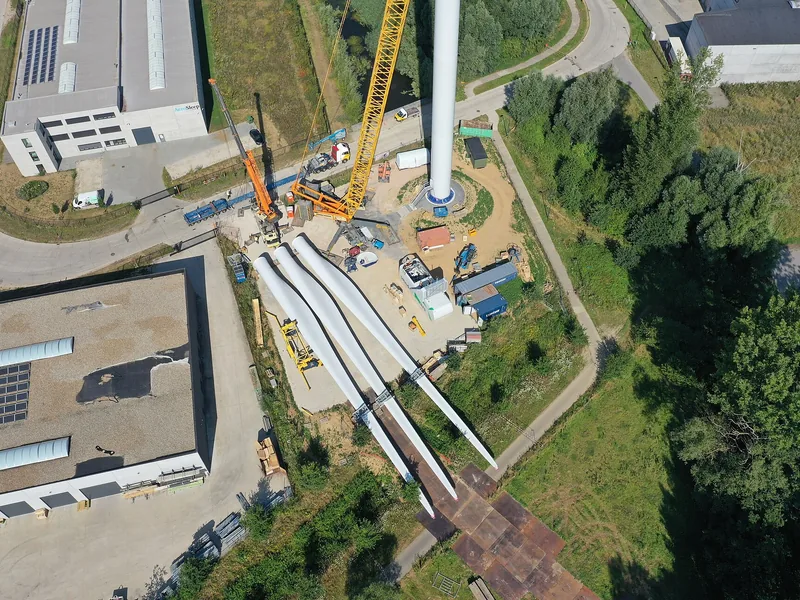
Two crane families do most of the heavy work on Australian wind farms. Large crawler cranes, often in the 600 to 1600 tonne class and rigged with luffing jibs, carry the main lifts for turbine erection and for major component exchange where the crane must hold a heavy load at large radius and full height. They track between positions on prepared ground but are slow and costly to assemble, so lift sequencing matters. All-terrain cranes, typically 200 to 750 tonne class, mobilise faster on public roads and suit component swaps, tailing duties and sites where a crawler cannot be justified.
Sizing the crane to the lift
Crane selection is driven by the load chart, not the headline capacity. A provider works back from the heaviest component, the hub height, the required radius and the rigging weight to the crane and counterweight configuration that keeps the lift inside the chart with margin. Getting this right at quoting stage avoids the far more expensive problem of a crane arriving on site that cannot make the lift. Our matched providers prepare the lift study, load charts and ground pressures before mobilising, and tie the crane plan to the main component exchange scope.
Uptower and self-erecting cranes
Not every job needs a ground crane. For lighter components inside or on top of the nacelle, uptower crane systems and self-erecting cranes let a provider lift pitch motors, yaw drives, converter modules, generators on some platforms and other parts without mobilising a large crawler at all. Crane-less and uptower methods cut cost and lead time dramatically and are often the difference between a turbine back online in days rather than weeks. They are central to modern gearbox, generator and drivetrain repair strategy, and matched providers advise when an uptower method is viable for your component and platform.
Blade and tower transport
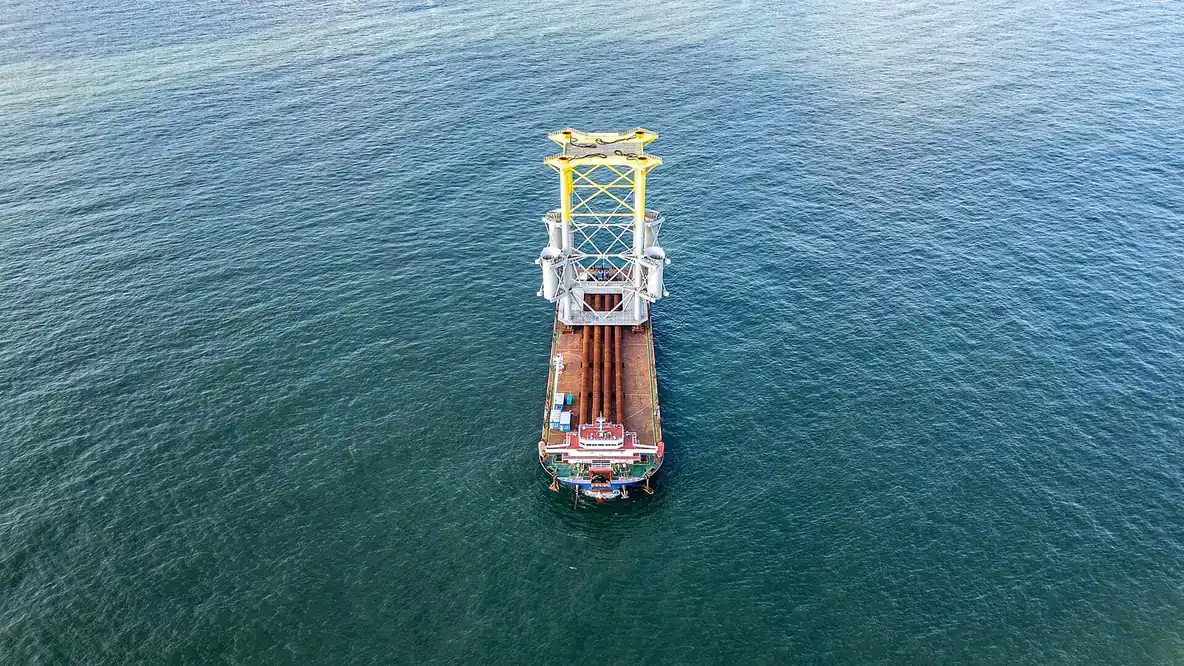
Transport, not the lift, is usually the hardest part of an Australian wind job. Blades of 60 to 90 metres and tower sections several metres in diameter travel as over-dimensional loads on specialised extendable, blade-lifter and self-steering trailers. The route from port or factory to a wind farm often runs for hundreds of kilometres over regional and local roads that were never built for loads this long, so swept-path analysis around roundabouts and intersections, bridge and culvert load ratings, and overhead clearances all have to be checked and sometimes modified. Damaged blades removed under blade repair scope face the same constraints in reverse.
Heavy haul logistics, permits and escorts
Moving oversize and overmass loads in Australia means working within each state's road transport and permit regime, which differ markedly between Victoria, Western Australia and New South Wales. Providers secure the state road permits, arrange pilot and in some cases police escort vehicles, and schedule travel windows that often restrict long blade moves to off-peak or night running. On remote Western Australian and regional sites the logistics chain can stretch across a week of staged moves, so the transport plan and the crane plan have to be locked together to avoid an idle crawler waiting on a late blade.
Ground engineering and weather windows
A large crawler imposes enormous ground pressure through its tracks and outriggers, and a failure of the ground under load is one of the most serious risks on any lift. Providers carry out ground-bearing assessment and design or verify the crane pad and hardstand, often with geotechnical input and mats or steel plates to spread the load. The final gate is weather: major lifts have strict wind limits, commonly around 9 to 12 metres per second at hub height depending on the component, and Australian sites on exposed ridgelines can lose days to wind. Matched providers build weather-window management into the schedule and sequence lifts so crews and cranes are ready the moment conditions allow.
Matched to your turbine platform and state
Crane methods, rigging frames and lift tools differ by platform, so we match providers with real erection and exchange experience on your machines, whether that is Vestas, Siemens Gamesa or Senvion. Crane hire also underpins end-of-life work, so the same providers support decommissioning and repowering campaigns where turbines are dismantled and components recovered. Coverage is organised by state so cranes and transport can reach your site across Victoria, Western Australia and New South Wales.
Wind Turbine Services is a sourcing and comparison service and does not perform maintenance itself. Enquiries are passed to independent service partners who contact you directly. There is no cost or obligation to owners and asset managers.
Frequently asked questions
What does wind turbine crane hire in Australia cover?
It spans crawler and all-terrain cranes for erection and major component exchange, uptower and self-erecting cranes for lighter lifts, blade and tower transport, heavy haul logistics, lift planning and engineering, ground-bearing and hardstand assessment, permits and pilot escorts, and weather-window management. Most jobs combine a main lift crane, a tailing crane and a fleet of transport and rigging support.
Which crane do I need for a component exchange?
It depends on hub height, component mass and site access. A main bearing, gearbox or generator swap on a modern multi-megawatt machine usually needs a large crawler or all-terrain crane rated for the lift at radius, often 600 to 1200 tonne class, supported by a tailing crane. Lighter uptower work on pitch, yaw or converter parts can use a self-erecting or roof-mounted crane without a full ground crane mobilisation. Matched providers size the crane against your exact platform and site.
Can you move long blades on Australian regional roads?
Yes. Blade transport is the most constrained part of most jobs. Blades of 60 to 90 metres move as oversize over-dimensional loads on specialised extendable or blade-lifter trailers, under state road permits, with pilot and police escorts and scheduled travel windows. Matched logistics providers plan the route, swept paths, bridge and roundabout clearances and any temporary road works well before the crane mobilises.
How much does wind turbine crane hire cost?
Large crawler and all-terrain crane campaigns are priced per mobilisation and per crane-day, and the mobilisation and assembly of a big crawler often outweighs the lift itself. A single major component exchange can run from tens of thousands of dollars to well over one hundred thousand once transport, rigging, engineering and crane hire are combined. Matched providers quote against your turbine, component, hub height and site access.
Do you cover utility fleets as well as single-turbine jobs?
Yes. We match full erection and major-maintenance campaigns across utility and IPP fleets, single emergency blade removals, and everything in between. Tell us the make, model, turbine count, component and site and we match crane and logistics providers suited to that scale and state.