Wind turbine technicians and labour hire for Australian sites
Turbines do not turn spanners on themselves. Every service visit, retrofit, blade programme and breakdown needs ticketed people at height, and the market for them is tight.
Australia's installed wind capacity has grown past 11 GW and the fleet keeps ageing, which means more scheduled service, more end-of-warranty inspections and more corrective work competing for the same pool of certified technicians. Operators rarely carry enough in-house crew to cover peak campaigns, roster gaps and unplanned outages at once. Labour hire and contract crews fill that gap: billable, ticketed people who mobilise for the duration you need and demobilise when the work is done. We match your enquiry to labour providers who cover your platform and state, and they contract with you directly.
Technician supply and labour hire
The core scope is straightforward: ticketed technicians, supplied as individuals or as crews, for the exact duration of your work. Providers in our network field single technicians to backfill a roster gap, two-person and three-person teams for planned service rounds, and full site-based crews for campaigns such as retrofits, major component exchanges and end-of-warranty inspections. Every technician arrives GWO-certified, medically cleared and ready for your site induction, so you are hiring productive hours rather than onboarding overhead.
Labour hire suits variable demand. Contract crews suit a defined programme with a fixed scope and end date. Both models shift the employment, payroll, workers compensation and ticket-currency burden onto the provider, which is why many operators use them to flex headcount through the autumn and spring service windows without carrying the cost year-round.
Site-based support teams
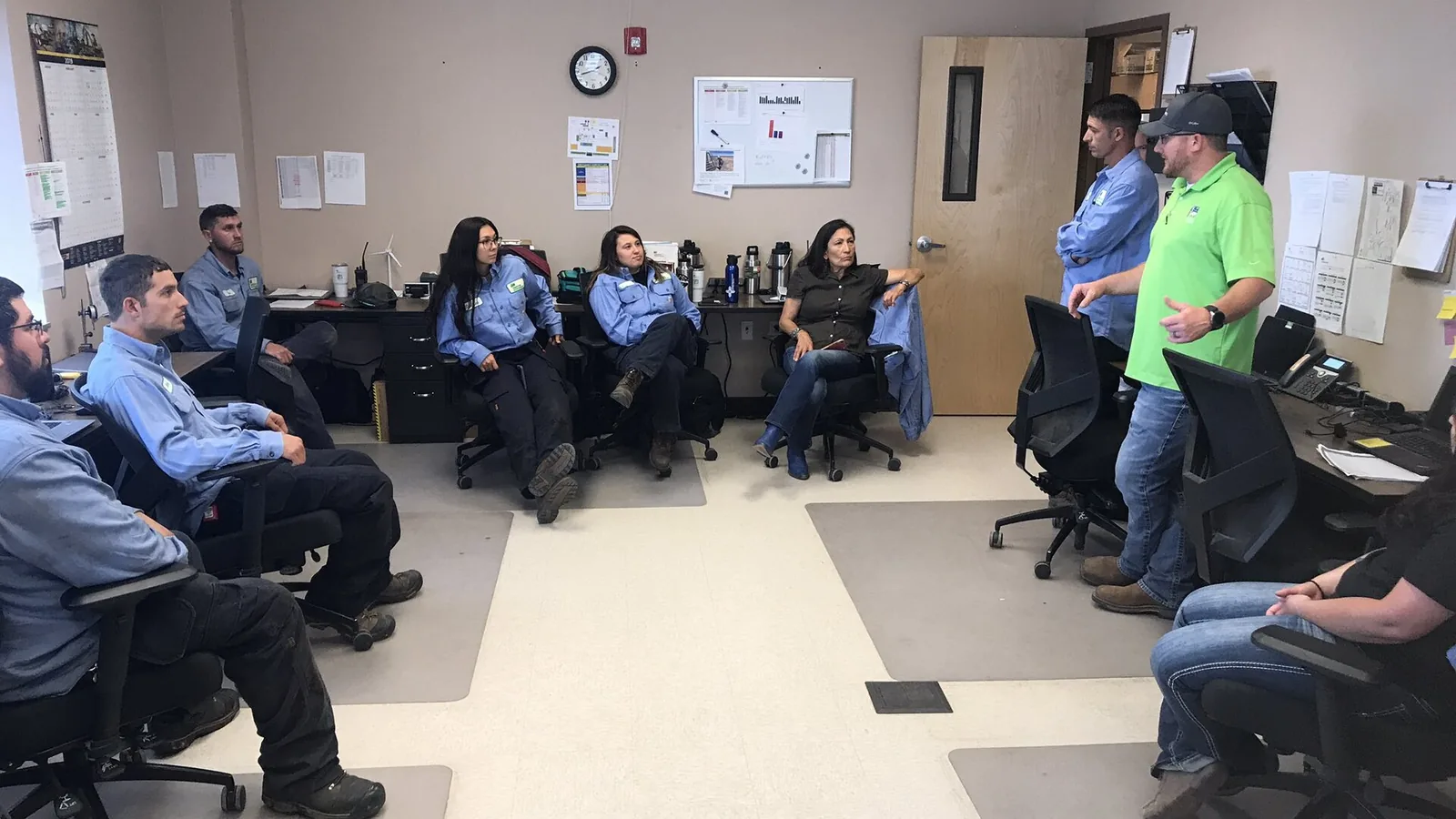
For larger sites and longer campaigns, providers stand up dedicated site-based teams: a supervisor or site lead, technicians, and the stores and logistics support to keep them productive. These teams integrate with your O&M programme and work to your permit-to-work and isolation procedures. If your campaign overlaps with routine service, the same crews can run both, which is where sourcing labour alongside wind turbine maintenance keeps mobilisation costs down.
Blade technicians and rope access (IRATA) crews
Blade work is a discipline of its own. Providers supply blade technicians trained in composite repair, coatings and leading-edge protection, and rope access crews certified to IRATA levels 1 to 3 for access that does not justify a crane or platform. Rope access is the workhorse of wind turbine blade repair in Australia: a two-person or three-person IRATA team can inspect and repair a blade at height for a fraction of the cost and downtime of a heavy lift. We match crews whose logged hours and repair experience suit the defect and the blade platform.
HV-ticketed electricians
High-voltage work needs people with the right electrical licence, HV switching authority and platform-specific training. Providers in our network supply HV-ticketed electricians for converter, transformer, switchgear and collector-network tasks, and for the switching and isolation that fronts almost every uptower job. On most Australian sites the internal network runs at 33 kV and steps up at a dedicated substation, so switching competence is not optional. Verify the ticket, the authority and the platform experience before anyone goes near live apparatus.
Mobilisation, camp and FIFO logistics
Getting a crew to site is half the job on remote Australian wind farms. Many sit hours from the nearest regional centre, with fly-in fly-out rosters, camp accommodation and chartered or scheduled flights built into the cost. Providers coordinate flights, accommodation, vehicles and site access so the crew arrives rested and compliant rather than burning the first day on logistics. For FIFO work the roster pattern, points of hire and camp standard all feed into the rate, so set them out in your enquiry. Sites in Western Australia, inland South Australia and western Victoria carry the longest mobilisation chains, and the providers we match plan for that rather than discovering it on week one.
Inductions, compliance and ticket verification
Work-health-and-safety law in every Australian state puts duties on the operator as well as the labour provider. Before a crew starts, the provider verifies GWO currency, medicals, electrical licences, HV authorities and IRATA logbooks, and runs the crew through your site induction, permit-to-work and isolation procedures. Providers in our network carry workers compensation, public and products liability cover and documented safe work method statements. Confirm currency dates and insurance certificates up front; a lapsed ticket is a stop-work finding, and a shared induction standard is what lets a mixed crew work safely alongside your own people.
Matched to your turbine platform
Technician competence is platform-specific. A crew fluent on Vestas controls and pitch systems is not automatically productive on a Goldwind direct-drive machine, so we match crews with real logged hours on your platform. Coverage is organised by state so crews can reach your site, with the heaviest technician demand across Victoria, South Australia, New South Wales, Queensland, Western Australia and Tasmania.
Wind Turbine Services is a sourcing and comparison service and does not perform maintenance itself. Enquiries are passed to independent service partners who contact you directly. There is no cost or obligation to owners and asset managers.
Looking for wind turbine technician work?
If you are a job seeker rather than an operator, the wind turbine technician trade is one of the faster-growing skilled roles in Australian energy. The job means working at height inside towers and nacelles, carrying out scheduled service, fault-finding across mechanical, hydraulic and electrical systems, and keeping machines generating. It is physical, safety-driven and often roster-based or FIFO, with strong demand following the fleet as it grows and ages.
The usual entry point is GWO Basic Safety Training: working at height, manual handling, first aid and fire awareness, often paired with GWO Basic Technical Training in mechanical, electrical and hydraulic fundamentals. Many technicians come from an electrical, mechanical or trades background and add turbine-specific tickets on top, while others enter through apprenticeships and traineeships with service providers. Rope access (IRATA) and HV tickets open the higher-paid specialist pathways.
To note clearly: this site routes labour-hire enquiries for operators sourcing crews, and we are not a recruiter, so we do not place individuals in jobs. If you want to get into the trade, start with our wind turbine technician career guide, which sets out GWO training, entry pathways, tickets, pay and how to find your first role in Australia.
Frequently asked questions
How quickly can you supply wind turbine technicians in Australia?
It depends on scope, location and tickets. For planned campaigns we match labour hire crews with weeks of lead time so mobilisation and inductions are done before the window opens. For breakdown cover and unplanned outages, providers in our network hold technicians on standby who can mobilise to most grid-connected sites at short notice. Remote and FIFO sites carry longer lead times because of flights, camp bookings and site inductions.
Are the technicians GWO-certified?
Yes. Labour hire crews supplied through our network hold current Global Wind Organisation (GWO) Basic Safety Training as a baseline: working at height, manual handling, first aid, fire awareness and sea survival where offshore scope applies. Many also hold GWO Basic Technical Training, and specialist crews add rope access (IRATA), high-voltage tickets and OEM platform credentials on top.
Do you supply individual technicians or whole crews?
Both. We match single technicians to backfill a roster gap, two-person and three-person teams for planned service, and full site-based crews for large campaigns such as end-of-warranty inspections, retrofits or blade programmes. Tell us the headcount, the tickets you need and the duration, and we match providers who can field that team.
Who employs the technicians and who carries insurance?
The labour hire or contract provider employs the crew, carries workers compensation and public and products liability cover, and holds the relevant tickets and medicals. Wind Turbine Services is a sourcing service: we route your enquiry to vetted providers who contract with you directly. We do not employ technicians and we are not a recruitment agency.
I am a job seeker. Can you get me wind turbine technician work?
We route labour hire enquiries for operators and are not a recruiter, so we cannot place you in a job directly. We can point you at the information that matters: our
wind turbine technician career guide covers GWO training, entry pathways, tickets and what the role involves in Australia.