Structural service for the Australian wind fleet
The foundation, tower and nacelle are the load path. A relaxed bolt or a cracked grout bed does not announce itself, and by the time it does the repair is far larger.
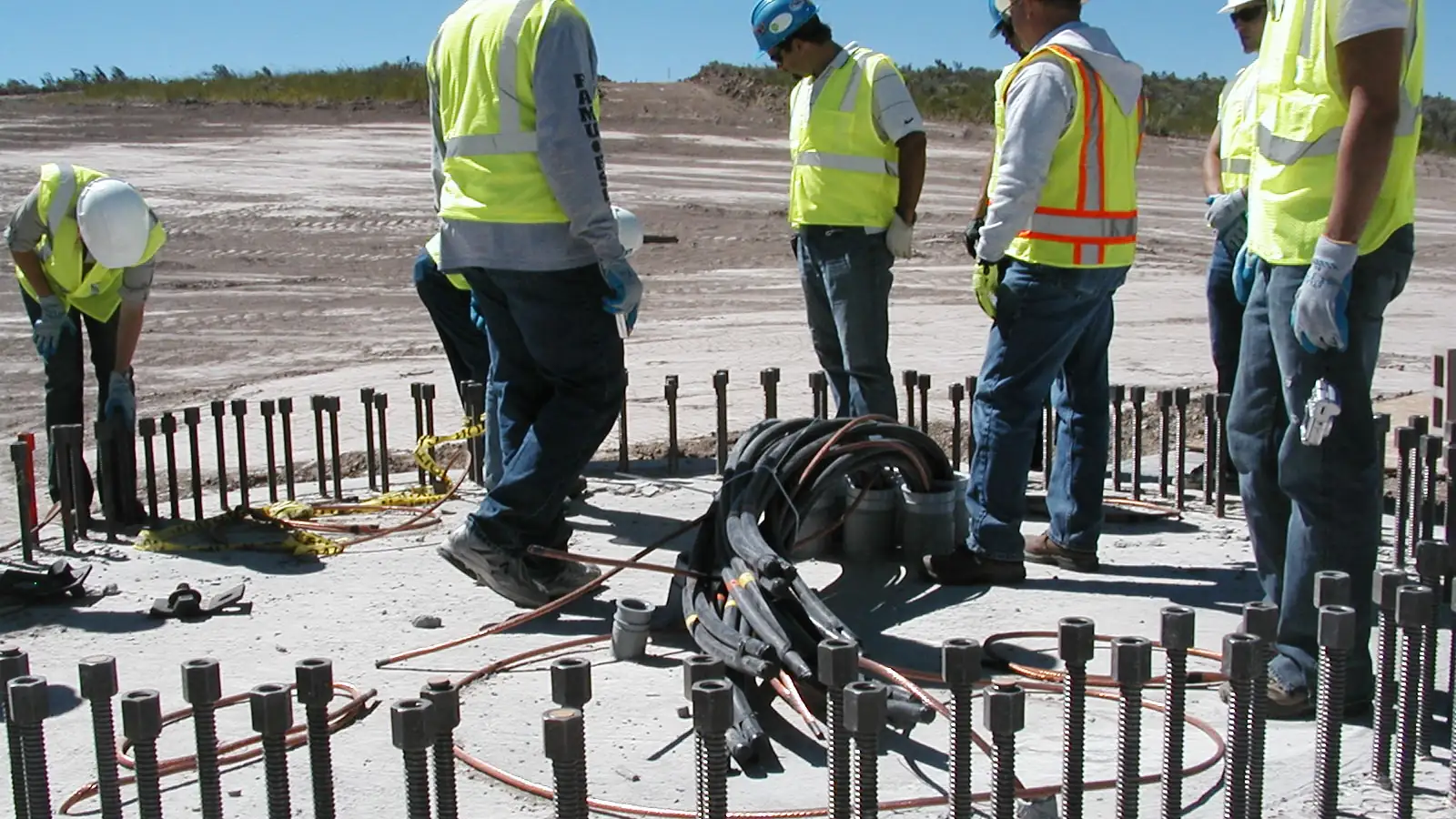
A modern multi-megawatt turbine puts enormous cyclic load through its tower base and foundation. Every gust, every yaw, every stop-start passes through the flange connections, the grout bed under the tower, and the anchor ring or bolt cage cast into the concrete. As the Australian fleet ages past the five-to-ten-year mark, structural defects become the quiet driver of downtime: grout breaks down, coatings fail and corrosion starts, bolts relax, and foundations show early crack or settlement signs. We match owners to providers who find and fix these problems before they force a shutdown.
Bolt torque and tensioning
Structural bolts hold the turbine together, and they do not stay tight on their own. Tower flange bolts, foundation ring bolts and the connection between tower sections are specified to a design pre-load, and that pre-load relaxes over the first service hours and continues to drift with thermal cycling and load. Providers in our network carry out bolt torque and tensioning to the OEM procedure, using calibrated hydraulic tensioning tools and torque multipliers, and they log every connection against your asset register. A bolt that has lost pre-load does not just risk the joint; it changes how load spreads across the remaining bolts, so a missed tensioning cycle can cascade. This is routine, measurable work and it is one of the most cost-effective structural tasks on the turbine.
Foundation grout repair
The grout bed under a tower flange transfers the full tower load into the foundation, and it is a common failure point on older Australian turbines. When the grout cracks, spalls or washes out, the flange begins to bear unevenly, bolts relax faster, and water gets into the joint. Foundation epoxy grout repair restores that interface: providers remove the failed material, prepare the surface, and re-grout with a high-strength epoxy or cementitious grout matched to the original specification, often with the tower jacked or the load managed so the new grout cures under the correct conditions. Done early, a foundation epoxy grout repair is an in-place fix with the turbine parked; left too long, the same defect turns into concrete remediation or a pedestal rebuild. Our wind turbine foundations guide explains how the grout bed and anchor system work.
Tower and foundation coating and corrosion protection
Steel towers and the exposed steel of a foundation ring live outdoors for twenty-five years or more, and in coastal and high-rainfall parts of Australia the corrosion load is severe. Protective coating systems break down from UV, salt and mechanical damage, and once the substrate is exposed, corrosion spreads under the surrounding paint. Coating and corrosion protection work covers inspection of the existing system, spot repair of damaged areas, full recoat where the system has reached end of life, and treatment of the plinth and any exposed reinforcement. Keeping the coating sound is far cheaper than recovering a corroded tower section or foundation ring, and it ties directly into the structural life of the asset. The wind turbine tower guide covers tower construction and the coating systems used.
Ladder, safety system and earthing checks
Inside the tower sit the ladder, fall-arrest rail, service lift, rest platforms and the earthing system, and all of them are inspected and maintained as part of structural service. Ladder and safety-system maintenance keeps the climb compliant and the rescue plan valid, which is a frequent work-health-and-safety audit item in every Australian state. Earthing and earth-resistance checks confirm the turbine is bonded and the earth path is intact, which protects both people and equipment. Where a fault sits on the blade down-conductor or the lightning receptors rather than the foundation earth, we route the work to our lightning protection providers so the full earth path is covered end to end.
Nacelle cover and bedplate repair
The nacelle houses the drivetrain, and two parts of it are structural rather than mechanical: the nacelle cover and the bedplate. The nacelle cover is the glass-reinforced-plastic shell that keeps weather out of the machine, and it cracks, delaminates and loses panels over time, letting water onto the drivetrain. Nacelle cover repair restores the shell and its seals. The bedplate is the main cast or fabricated frame that carries the main shaft, gearbox and generator, and bedplate repair deals with cracking, bolt-hole wear and corrosion in that frame. Both are specialist jobs that keep the nacelle weathertight and the drivetrain correctly supported.
Crack and settlement monitoring, and concrete remediation
Not every foundation defect needs an immediate fix, but every one needs watching. Foundation crack and settlement monitoring uses crack gauges, survey levels and, on higher-risk sites, instrumented monitoring to track whether a defect is stable or growing. When movement or cracking passes a threshold, concrete remediation follows: crack injection to seal and restore the concrete, patch repair of spalled areas, and in serious cases structural strengthening. Platform and bolt inspection rounds out the scope, confirming the internal steelwork, platforms and their fixings are sound. Reading the trend correctly is what separates a planned, cheap intervention from an emergency, and providers in our network bring the structural engineering judgement to make that call.
Matched to your turbine platform
Foundation design, grout specification and bolt procedures differ by platform, so we match providers with real experience on your machines, whether that is Vestas, Nordex or Goldwind. Structural work usually runs alongside routine maintenance and follows a structural inspection, and the turbine cleaning providers in our network often work the same site visit. Coverage is organised by state so crews can reach your site: Victoria, Tasmania and South Australia.
Wind Turbine Services is a sourcing and comparison service and does not perform maintenance itself. Enquiries are passed to independent service partners who contact you directly. There is no cost or obligation to owners and asset managers.
Frequently asked questions
What does tower, foundation and nacelle service cover in Australia?
It spans the full structural scope of a turbine: bolt torque and tensioning on tower flanges and foundation rings, foundation epoxy grout repair, tower and foundation coating and corrosion protection, ladder and safety-system maintenance, earthing and earth checks, nacelle cover and bedplate repair, foundation crack and settlement monitoring, concrete remediation, and platform and bolt inspection. Most owners run this work on a planned cycle with condition-based intervention when inspection flags a defect.
How do I know if my turbine foundation needs repair?
Common triggers are grout cracking or spalling under the tower flange, water pooling in the plinth, rust staining on the pedestal, bolt relaxation found at scheduled torque checks, and movement picked up by crack or settlement monitoring. A structural inspection confirms whether the fix is a localised foundation epoxy grout repair, a coating repair, or a fuller concrete remediation. Our
inspection providers can scope it before any repair is quoted.
Who performs the work I am matched with?
Independent structural and civil contractors, OEM out-of-warranty service arms, and specialist grouting, coating and height-safety firms. Wind Turbine Services is a sourcing service: we route your enquiry to vetted providers who cover your turbine platform and state, and they contact you directly.
Can foundation grout repair be done without removing the turbine?
In most cases yes. Foundation epoxy grout repair, re-grouting of the flange interface, crack injection and coating repair are done in place with the turbine parked, not dismantled. Only major concrete remediation or a full pedestal rebuild needs a crane and extended downtime, and even then the tower often stays up. Matched providers scope the least-invasive fix that restores the design clamping load.
Do you cover earthing and lightning earth checks?
Yes. Earthing and earth-resistance checks sit within structural and safety-system service, and they tie into the blade and down-conductor path. Where the fault is on the blade or down-conductor rather than the foundation earth, we route the enquiry to our
lightning protection providers.