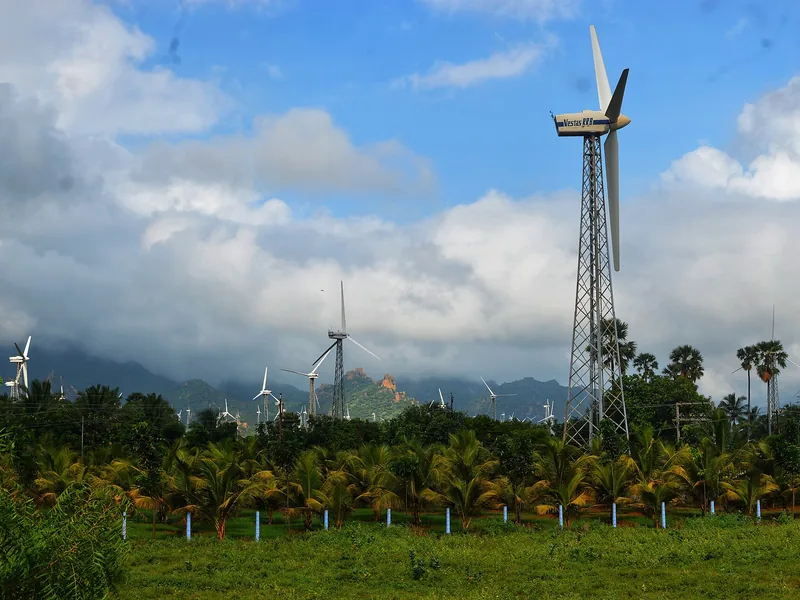
Wind turbine inspection for the Australian fleet
You cannot repair what you have not found. Inspection is the data layer under every maintenance and repair decision, and in a maturing fleet it is the difference between a planned fix and a crane job.
Australia's installed wind capacity has grown past 11 GW and the average machine age keeps climbing. As turbines pass the five-to-ten-year mark, leading-edge erosion, lightning strikes, coating loss, bond-line failures and structural fatigue all accelerate. A disciplined inspection regime catches these early, and a wind turbine drone inspection is now the fastest, safest way to screen every blade surface across a whole site in a single mobilisation. We match owners to independent providers who deliver the full inspection scope and hand back a report you can act on.
Wind turbine drone inspection
A wind turbine inspection drone flies a programmed path over each blade and captures hundreds of overlapping high-resolution images per turbine. Crews work from the ground, so there is no rope team on the blade and the turbine is back online in hours. The output is a georeferenced defect map for every blade face, with each crack, pinhole, erosion patch, coating loss or bond-line anomaly located and sized. Drone inspection is the ideal screening layer: it tells you which blades need a closer rope access look and which are sound, so repair budgets go where they matter.
Automated and AI defect analysis
Modern drone platforms pair the image set with automated defect detection. Machine-learning models flag and classify damage, grade severity to a consistent scale, and trend each blade across successive surveys so you can see whether an erosion patch is stable or spreading. This removes much of the subjectivity from manual photo review and lets an asset team compare a 60-turbine fleet on one dashboard.
Rope access and internal blade inspection
Where the drone finds something, or where a hands-on survey is specified, rope access (IRATA) technicians abseil the blade to inspect and measure defects directly, tap-test laminates for delamination, and confirm repair scope. Rope access is also used for internal blade inspection, where a technician enters the blade from the root to check the shear web, spar caps, bond lines, bulkheads and the structural interior that a drone cannot see. Internal and external surveys together give a complete picture of blade condition, which is exactly what you need before committing to blade repair.
Lightning-protection and drainage-hole inspection
Two checks are easy to overlook and costly to miss. Lightning-receptor and down-conductor continuity testing confirms the blade's lightning protection system can still carry a strike to earth, because a degraded path turns the next storm into a blade-destroying event. Drainage-hole inspection confirms the tip drains are clear, since a blocked drain lets water pool, freeze and crack the laminate. Both belong in every scheduled blade survey.
Ultrasound and NDT
Non-destructive testing (NDT) extends inspection into the structure itself. Ultrasonic testing measures laminate thickness and finds internal voids, disbonds and water ingress in blades, while on the tower and foundation, ultrasound, magnetic particle and dye-penetrant methods check structural welds, flange faces and high-strength bolts for fatigue cracking. NDT is specialist work and the providers we match hold the relevant certifications. Where NDT flags a drivetrain or bearing concern, it often dovetails with condition monitoring so the finding feeds straight into the maintenance plan.
End-of-warranty and commissioning inspections
Two milestones demand a formal, documented inspection. A commissioning inspection at handover sets the baseline: it records as-built condition, verifies torque and bond quality, and gives you evidence of any defect present from day one. An end-of-warranty inspection, run three to six months before the OEM warranty lapses, finds and logs every claimable defect while the manufacturer is still liable. Skipping it is one of the most expensive mistakes an owner can make, because defects found the week after expiry become the owner's cost. Matched providers deliver both as structured campaigns with full reporting.
Tower, foundation and inspection reporting
Inspection is not only the blades. Tower, foundation and nacelle surveys check for concrete cracking and settlement at the foundation, corrosion and weld condition on steel sections, bolt tension at tower flanges, and coating breakdown on the structure. We match this scope through our tower, foundation and nacelle providers. Across every inspection type, the report is the product: providers in our network deliver findings through inspection software that stores georeferenced images, severity grading, repair recommendations and a year-on-year history, so your asset team has one source of truth for the whole fleet.
Matched to your turbine platform
Inspection access and defect patterns differ by platform, so we match providers with real experience on your machines, whether that is Vestas, GE Vernova or Goldwind. Coverage is organised by state so crews can reach your site, including New South Wales, Queensland and Western Australia.
Wind Turbine Services is a sourcing and comparison service and does not perform maintenance itself. Enquiries are passed to independent service partners who contact you directly. There is no cost or obligation to owners and asset managers.
Frequently asked questions
What does wind turbine drone inspection cover in Australia?
A drone inspection flies a high-resolution camera over every blade surface, the tower, nacelle exterior and visible tower connections to map cracks, erosion, lightning damage, coating loss and bond-line defects. It is fast, needs no rope teams on the blade, and produces a georeferenced image set for each blade face. Matched providers deliver drone inspection as a stand-alone survey or as the screening layer ahead of rope access repair.
When should I book an end of warranty inspection?
Schedule an end-of-warranty inspection three to six months before the OEM warranty expires so defects can be logged and claimed while the manufacturer is still liable. A thorough survey combines drone imaging of the blades with internal blade, tower and foundation checks, and often ultrasound or other non-destructive testing (NDT) on structural welds and bolts. The report gives you a documented baseline for the handover.
Who performs the work I am matched with?
Independent inspection firms, rope access (IRATA) crews, drone survey operators and NDT specialists, plus OEM out-of-warranty service arms. Wind Turbine Services is a sourcing service: we route your enquiry to vetted providers who cover your turbine platform and state, and they contact you directly.
How much does a wind turbine inspection cost?
A drone blade inspection commonly runs in the order of AUD 400 to 900 per turbine depending on fleet size, access and travel, while rope access and internal inspections cost more because crews work at height for longer. NDT and commissioning inspections are quoted against scope. Matched providers price against your exact fleet, site and reporting needs.
Do you cover small and community wind as well as utility fleets?
Yes. We match utility and IPP fleets, community and farm-scale wind, and distributed turbines on mines and remote sites. Tell us the make, model and turbine count and we match inspection providers suited to that scale and access.