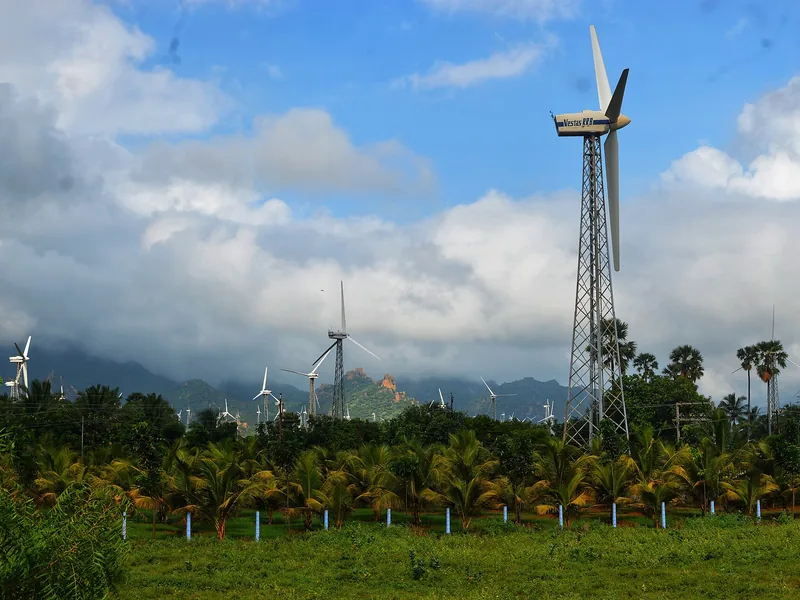
GE Vernova in Australia
From MacIntyre in Queensland to Granville Harbour in Tasmania, GE Vernova turbines run across the mainland and island states.
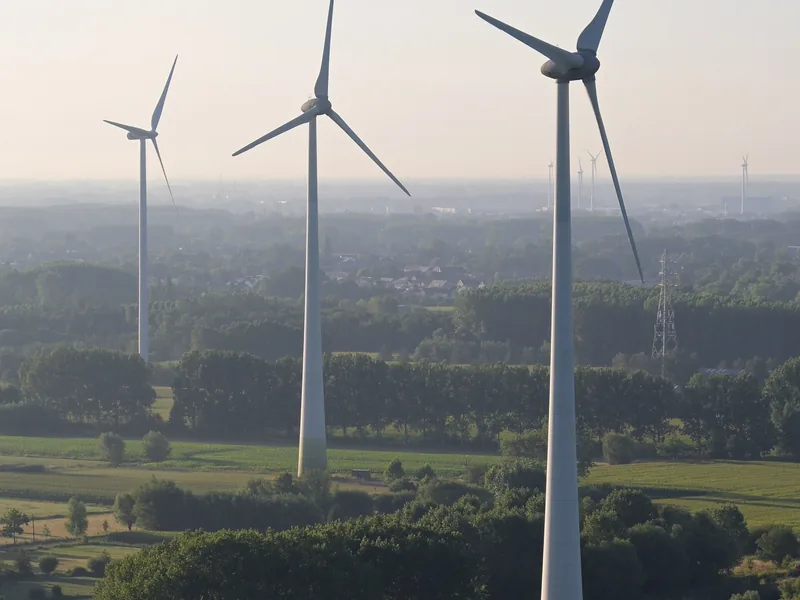
GE Vernova, the business formerly known as GE Renewable Energy, has a substantial onshore installed base in Australia. The fleet ranges from sub-2 MW GE 1.5sle and 1.6-82.5 machines commissioned years ago through the 2.5-100 and 2.75-120 platforms to the newer 5 MW-plus Cypress units now going up. MacIntyre in Queensland, built on the GE Cypress 5.X, is one of the largest wind farms in the Southern Hemisphere, Dulacca in Queensland adds further GE capacity, and Granville Harbour in Tasmania runs the GE 3.6. As the older platforms pass their warranty terms, demand for independent maintenance, electrical and control repair and drivetrain work keeps rising.
DFIG drivetrains and the Cypress blade
Two design choices shape GE service work in Australia. The 1.x and 2.x platforms use a doubly-fed induction generator, so the drivetrain carries slip rings and carbon brushes that wear and need scheduled replacement, alongside the partial-scale converter that handles rotor-side power. The Cypress platform, by contrast, uses a two-piece blade joined on site, which lets longer blades travel to remote inland sites but adds a blade joint that must be inspected on a planned cycle. Any provider you engage on a GE fleet should understand both of these as routine, not as exceptions.
Common GE Vernova faults
Across the GE fleet, the faults reported most often are gearbox and bearing wear, DFIG slip-ring and brush wear on the 1.x and 2.x machines, converter IGBT faults, pitch system issues, yaw gear and brake wear, main bearing wear, and blade leading-edge erosion. On Cypress units the two-piece blade joint is an added inspection point. Older 1.5 and early 2.x machines frequently reach the stage where a planned main component exchange is more economic than repeated repairs, so condition data and a spares plan matter well before a failure forces an unplanned outage.
Electrical and control systems
The DFIG architecture puts the converter, slip rings and control systems at the centre of GE reliability. Brush and slip-ring maintenance, IGBT module replacement and control software faults are common call-outs, and they need technicians with high-voltage tickets and platform-specific GE experience. We route these to providers who cover electrical and control system repair rather than general mechanical crews.
Out-of-warranty service options
When a GE site leaves its warranty term, owners weigh three paths: a GE service agreement, an independent service provider, or self-perform with contracted specialist support. Each has trade-offs in cost, spares access and response time, and the right answer often differs between a legacy 1.5 fleet and a near-new Cypress site. We match your enquiry to providers across all three models so you can compare on your own terms.
Parts and inspection
GE spares come through the OEM, through independent suppliers, and as refurbished or remanufactured components for legacy platforms. Pairing a drone or rope-access inspection with a parts plan keeps unplanned downtime low, and on Cypress machines that inspection should take in the blade joint as well as the leading edge. We cover GE fleets in Queensland, Tasmania, New South Wales and every other state.
Wind Turbine Services is an independent sourcing and comparison service and is not affiliated with, endorsed by or an agent of GE Vernova Inc. The GE Vernova name and model designations are used only to describe the turbine platforms our partner providers service. We do not perform work ourselves; enquiries are passed to independent providers who contact you directly.
Frequently asked questions
Which GE Vernova models are installed in Australia?
The onshore GE fleet in Australia spans the older GE 1.5sle and 1.6-82.5 machines, the 2.5-100 and 2.75-120 platforms, the 3.2-103 and 3.6, and the newer Cypress 5.3-158, 5.5-158 and GE 6.1 units. Public projects include MacIntyre in Queensland (GE Cypress 5.X, one of the largest wind farms in the Southern Hemisphere), Dulacca in Queensland, and Granville Harbour in Tasmania (GE 3.6).
What are the common GE Vernova faults?
On the 1.x and 2.x platforms the doubly-fed (DFIG) drivetrain brings slip-ring and brush wear, plus converter IGBT faults. Across the fleet we also see gearbox and bearing wear, pitch and yaw system faults, main bearing wear, and blade leading-edge erosion. The Cypress platform uses a two-piece blade, so the blade joint needs periodic inspection alongside standard uptower work.
Can I service a GE Vernova turbine out of OEM warranty?
Yes. Once a GE fleet leaves its warranty term, owners can stay on a GE service agreement, move to an independent service provider, or build a self-perform capability with contracted specialist support. We match your enquiry to providers with hands-on GE experience and the right spares access.
Where do GE Vernova spare parts come from?
Parts are sourced through the OEM, through independent parts suppliers, and as refurbished or remanufactured components for legacy platforms. We can route parts enquiries through our
parts and spares network alongside the repair itself.
Who performs the work I am matched with?
Independent service providers, GE out-of-warranty service arms and specialist blade, drivetrain and electrical firms with GE experience. Wind Turbine Services is a sourcing service: we route your enquiry to vetted providers who cover your platform and state, and they contact you directly.