Fix the gearbox before it fixes your budget
A failed gearbox is the classic unplanned outage: a crane, a replacement unit and a week of lost generation. Wind turbine gearbox repair exists to head that off, or to put the drivetrain back together quickly when the worst happens.
As the Australian fleet ages past mid-life, gearbox bearings and gears move into the window where failure rates climb. The difference between a cheap outcome and an expensive one is usually how early the damage is found and how well the repair-versus-replace call is made. Data from a condition monitoring programme often provides the first warning.
Inspection, borescope and oil analysis
Every sensible repair starts with evidence. A borescope passed through the inspection ports shows the condition of the gear teeth and bearings across the planetary, intermediate and high-speed stages, while oil analysis and particle counting reveal wear metals, water and contamination that signal trouble before it is visible. Together they grade the damage and tell you whether an uptower repair will hold or whether the gearbox needs to come down.
Uptower repair and oil change
Not every fault means a main crane. A great deal of work can be done uptower (in-situ), with the gearbox left in the nacelle: high-speed-shaft bearing replacement, intermediate-stage bearing work, seal and filter changes, and cooling repairs. An oil change and full system flush remove contaminated oil and wear debris, protecting the gears and bearings and extending service life. Uptower work keeps the turbine out of the crane queue and gets it back online fast.
Down-tower exchange and replacement
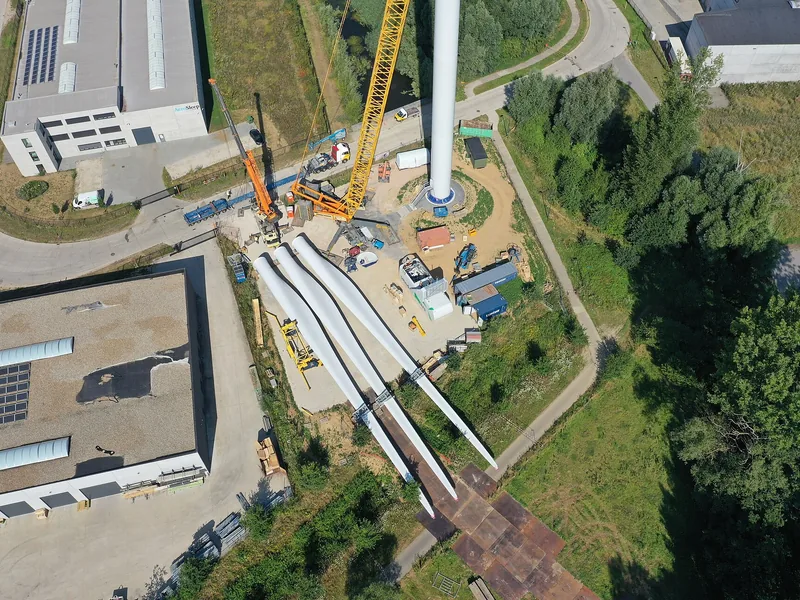
When planetary-stage damage or widespread contamination is confirmed, the gearbox comes out. That is a main component exchange: the nacelle is opened, the gearbox lifted out and either workshop-repaired or swapped for a factory-rebuilt exchange unit. Lining up the crane, the exchange gearbox and the right parts and spares in one planned window is what keeps the cost and the downtime contained.
Repair or replace?
The repair-versus-replace decision is where good advice earns its keep. Localised high-speed or intermediate-stage faults caught early are strong repair candidates; planetary-stage failure and secondary damage across multiple stages usually point to a replacement or a rebuilt exchange unit. The independent specialists we match weigh the inspection and oil findings against the age of the turbine and the cost of a crane, then recommend the option that protects your return. For the engineering background, see our wind turbine gearbox guide, and for the wider drivetrain the parent gearbox, generator and drivetrain page.
Wind Turbine Services is a sourcing and comparison service and does not perform monitoring itself. Enquiries are passed to independent service partners who contact you directly. There is no cost or obligation to owners and asset managers.
Frequently asked questions
Can a wind turbine gearbox be repaired up-tower, or must it come down?
It depends on the damage. Many faults, high-speed-shaft bearings, seals, filters, an intermediate-stage bearing, can be addressed uptower (in-situ) with the gearbox left in the nacelle, which avoids a main crane. Planetary-stage damage or widespread contamination usually means a down-tower exchange, where the gearbox is lifted out for workshop repair or replacement.
How do I know whether to repair or replace the gearbox?
The decision turns on where the damage sits and how far it has spread. Localised high-speed or intermediate-stage faults caught early are good repair candidates. Planetary-stage failure, metal throughout the oil and secondary damage across multiple stages usually favour a replacement or a factory-rebuilt exchange unit. A borescope inspection and oil analysis give the evidence to choose.
What does a gearbox inspection involve?
A technician drains a sample for oil analysis, runs a borescope through the inspection ports to view the gear teeth and bearings, checks the high-speed and intermediate stages, and reviews any condition-monitoring vibration history. The findings grade the damage and set out whether an uptower repair, a down-tower exchange or continued monitoring is the right call.
Will an oil change and flush fix a gearbox problem?
An oil change and flush remove contaminated oil, wear debris and water, which protects the bearings and gears and buys time, but they do not reverse existing damage. They are part of planned maintenance and a sensible step after a repair, not a substitute for fixing a spalling bearing or a damaged gear.
Who carries out the gearbox repair?
Independent drivetrain specialists, uptower repair crews and gearbox workshops with wind experience. Wind Turbine Services is a sourcing service: we route your enquiry to vetted providers who cover your turbine platform and state, and they contact you directly.