Out-of-warranty wind turbine repair for the Australian fleet
A repair you can plan is cheap. A repair that stops a turbine for a week in a strong wind month is not.
Australia's installed wind capacity has passed 11 GW and the average machine is ageing out of its original equipment manufacturer (OEM) warranty. Once that warranty lapses, the owner carries the corrective risk, and wind turbine repair becomes one of the largest controllable costs across the fleet. The providers we match specialise in exactly this: out-of-warranty corrective repair that returns a machine to service fast, and where possible repairs a component rather than replacing it outright. That distinction, repair over replacement, is where an experienced independent provider saves an owner the most money.
Repair work splits into two streams. The first is reactive: a fault code, a trip, a stopped turbine. The second is planned corrective work, where a defect found during a maintenance visit or inspection is scheduled into a future repair window. We match providers who cover both, so a reactive callout and the backlog of deferred defects can be cleared by the same crew on the same site mobilisation.
24/7 breakdown response
When a turbine stops, the clock starts on lost generation. Our emergency repairs desk runs phone-first dispatch around the clock: you describe the fault code and symptoms, and we route the call to a provider who covers your platform and state and can mobilise. Lightning strike response, overspeed events and converter trips are the most common emergency calls. For a remote site, the provider often sources critical spares in parallel with mobilisation so the crew arrives with the part in hand rather than making a second trip. Breakdown response frequently depends on heavy lift, so we coordinate with crane hire providers where a major component has to come down.
General mechanical and structural repair
The bulk of corrective work is unglamorous mechanical repair: seized or worn bearings, failed couplings, brake calliper and disc repair, bolted-joint failures, cooling system leaks, cable and busbar faults, and the hundreds of smaller defects that a turbine accumulates over a decade of operation. Providers in our network carry the uptower tooling, service-exchange stock and platform knowledge to clear these without a full component swap wherever the condition allows. Where the drivetrain itself is involved, we route to specialist gearbox, generator and drivetrain repair firms who rebuild rather than replace.
Storm, lightning and fire damage repair
Australian wind sites take a beating from lightning, hail, cyclonic wind and, in the worst case, nacelle fire. Damage repair is a distinct discipline: it starts with insurer-grade assessment and root-cause reporting, then moves to reinstatement that returns the machine to its certified condition. Providers in our network document the event for the insurer, quantify consequential damage (a lightning strike that enters a blade can also take out the converter and control electronics), and carry out the structural and electrical reinstatement. For overspeed and brake-failure events the assessment extends to the pitch and yaw systems that should have arrested the rotor.
Hydraulic systems
Hydraulics sit behind pitch actuation, rotor and yaw braking, and in many platforms the blade-feathering safety chain. A hydraulic fault is both a reliability and a safety issue: a turbine that cannot feather its blades or set its brake cannot safely run. Repair covers power-pack overhaul, accumulator replacement, cylinder and seal repair, hose and manifold renewal, valve-block exchange and leak rectification, followed by pressure testing and function checks against the OEM safety case. Pitch-specific hydraulic work is detailed on the pitch and yaw systems page.
Nacelle cover and spinner repair
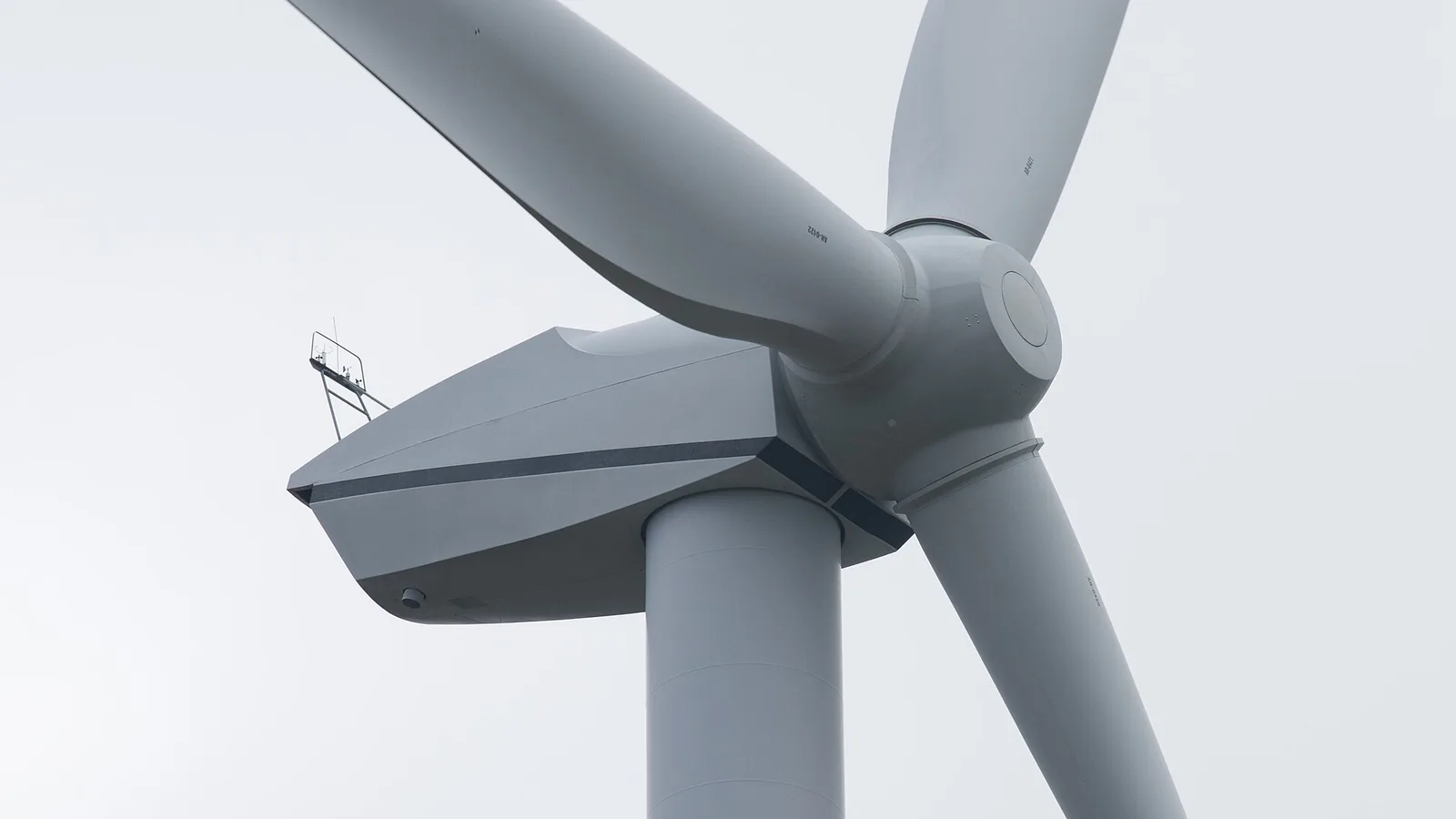
The nacelle cover (canopy) and the spinner (the composite nose cone over the hub) are glass-reinforced plastic (GRP) structures that protect the machine and crews from weather. They crack, delaminate and lose fasteners under UV, hail and cyclic load, and a failed panel is both a safety hazard to people below and a route for water ingress into the electronics. Providers carry out GRP crack and delamination repair, fastener and hatch renewal, seal replacement and, where a panel is beyond repair, moulded replacement. This work is often combined with an at-height access mobilisation so the cover, spinner and any blade defects are cleared in one visit.
Pitch, yaw and electrical faults
The most downtime-heavy faults are usually in the pitch, yaw and control electrics, so we route those to two specialist children. Yaw drive, motor, gear and bearing repair, and pitch motor, bearing and hydraulic pitch work with service-exchange units, are covered under pitch and yaw systems. Converter and inverter repair, PLC, controller and HMI faults, transformer and switchgear work, SCADA faults and high-voltage (HV) testing are covered under electrical and control systems. Matching the right specialist to the fault code is the fastest route back to generation.
Matched to your turbine platform and state
Repair parts and fault behaviour differ by platform, so we match providers with real experience on your machines, whether that is Vestas, Goldwind or GE Vernova. Coverage is organised by state so crews and cranes can reach your site: Victoria, South Australia and New South Wales among them. Tell us the make, model, turbine count and fault once, and vetted providers respond with availability and pricing.
Wind Turbine Services is a sourcing and comparison service and does not perform repairs itself. Enquiries are passed to independent service partners who contact you directly. There is no cost or obligation to owners and asset managers.
Frequently asked questions
What does wind turbine repair in Australia cover?
It spans out-of-warranty corrective repair across the whole machine: general mechanical and structural repair, storm and fire damage reinstatement, hydraulic systems, nacelle cover and spinner repair, plus specialist
pitch and yaw and
electrical and control faults. Most owners call us for an unplanned stoppage, but we also match planned corrective works bundled with a service visit.
Who performs the repair I am matched with?
Independent service providers, OEM out-of-warranty service arms and specialist electrical, hydraulic and composite firms. Wind Turbine Services is a sourcing service: we route your enquiry to vetted providers who cover your turbine platform and state, and they contact you directly.
How fast can a provider respond to a breakdown?
For a stopped turbine our network prioritises phone-first dispatch through the
emergency repairs desk. Response time depends on fault type, site remoteness and whether a crane or long-lead spare is needed. Minor electrical and hydraulic faults are often cleared within a day; major component exchange can take weeks once a crane and part are secured.
Can you repair out-of-warranty turbines?
Yes, and that is the bulk of what we match. Once a turbine leaves its OEM warranty the owner carries the corrective risk, so independent repair becomes the cost driver for the fleet. Providers in our network hold the platform experience, service-exchange stock and tooling to repair rather than wholesale replace, which keeps cost down.
Do you handle storm and fire damage claims?
Providers in our network carry out insurer-grade damage assessment, root-cause reporting and reinstatement for lightning, storm, overspeed and fire events. Tell us the make, model and nature of the damage and we match assessors and repair crews who can document the claim and return the turbine to service.