Gearbox, generator and drivetrain repair for the Australian wind fleet
The power train turns rotor torque into grid-ready electricity, and when it fails the bill is large. Catching a drivetrain fault early is the single highest-value thing an owner can do.
As Australia's wind fleet ages past the five-to-ten-year mark, drivetrain failures become the dominant cost driver. A Vestas, GE Vernova or Suzlon machine running out of warranty will, over its life, spend more on gearbox, main bearing and generator events than on any other scope. The components are heavy, the access is hard, and a downtower exchange ties up a crane. That is why owners pay for condition-based maintenance: to turn a sudden failure into a planned, lower-cost repair. We match you to providers who do that repair work well, and who carry the remanufactured stock to do it fast.
Gearbox repair, overhaul and remanufacturing
The gearbox steps rotor speed up to generator speed through planetary and helical stages, and it lives a hard life under variable load. Common failure modes are bearing spalling, micropitting on gear teeth, broken or cracked gears, and the premature bearing failure known as white etching cracks. Providers in our network start with a gearbox inspection and borescope to grade the damage, then recommend the lowest-cost path that restores reliability.
Uptower versus downtower repair
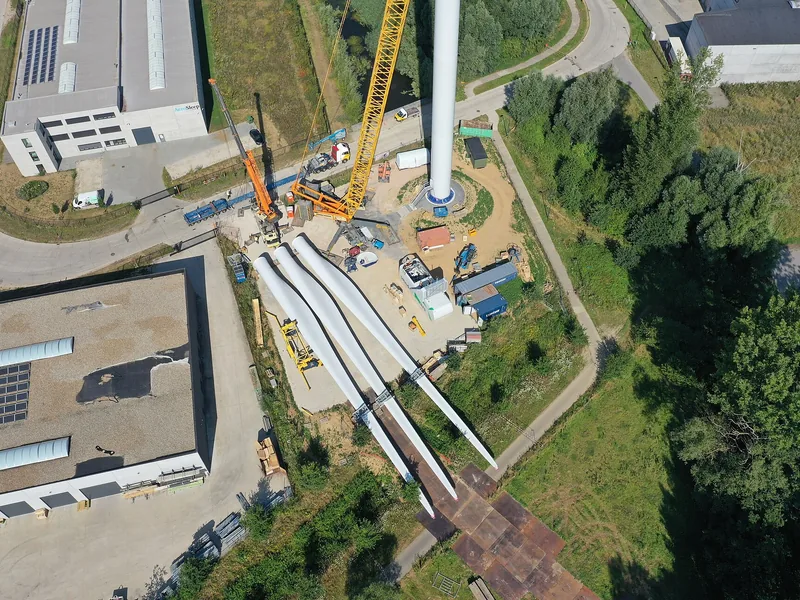
Where damage is confined to accessible bearings, seals or filters, an uptower gearbox repair lets a crew work inside the nacelle without a crane, which is far cheaper and faster. Where gears or the planetary stage are damaged, the gearbox comes down for a downtower repair or a straight exchange. A reconditioned or remanufactured gearbox is often fitted while the failed unit is rebuilt and returned to a pool, smoothing spares spend across a fleet. The heavy lift itself is organised through our main component exchange providers.
Oil analysis and borescope inspection
Routine oil sampling, particle counting and debris monitoring reveal wear long before it stops a turbine, and a borescope lets a technician grade gear and bearing surfaces without a full strip-down. Combined with vibration data from condition monitoring, this is how a developing gearbox fault is caught and planned. Our deeper wind turbine gearbox guide explains the stages and failure modes in plain terms.
Generator repair, rewind and exchange
The generator converts mechanical power into electricity, and in most modern Australian turbines it is a doubly-fed or full-converter machine running at high speed. Faults range from bearing wear and cooling problems to insulation breakdown in the windings. A generator repair may be as simple as a bearing and slip ring service, or as involved as a full rewind where the stator or rotor windings are stripped and replaced on the bench.
Generator exchange program
Because a rewind takes weeks, specialist providers run a generator exchange program: a pool of remanufactured units sits ready, a serviceable exchange generator is fitted when one fails, and the faulty unit is rebuilt and returned to the pool. This cuts downtime from weeks to days and is the standard approach for fleets of common platforms. Our wind turbine generator guide covers the generator types and why rewinds happen.
Slip rings, couplings and brakes
The drivetrain is more than the gearbox and generator. Slip rings carry current and signals to the rotor and wear or arc over time. The high-speed coupling between gearbox and generator absorbs torque spikes and misalignment, and the mechanical brake holds the rotor for service. Providers in our network repair and replace these items in the same visit, and check converter and cooling health while the drivetrain is open.
Main bearing and main shaft repair
The main bearing and main shaft carry the entire rotor load into the drivetrain, so a main bearing failure is one of the most serious and costly events a turbine can suffer. Early symptoms show up as temperature rise, grease contamination and vibration. Where caught early, a main bearing can be regreased, reconditioned or exchanged uptower on some platforms; where it has spalled or seized, a downtower main-component exchange with a crane is needed. Specialist providers assess the main shaft for cracking and fretting at the same time and remanufacture or replace as the condition dictates.
Bearing damage modes we match providers for
Not every bearing fault is the same, and the repair path depends on the mode. Classic rolling-contact fatigue produces spalling, where fragments break away from the raceway. Micropitting is a surface distress that roughens gear flanks under thin oil films. White etching cracks are a microstructural failure where the bearing steel changes phase and cracks axially, often at a fraction of rated life, and are a leading cause of premature gearbox bearing replacement in wind service. Providers in our network grade the mode by borescope and oil debris, then advise whether an uptower bearing swap, a downtower gearbox exchange or a full remanufacture is the right call.
Matched to your turbine platform and state
Drivetrain components, repair procedures and remanufactured stock differ by platform, so we match providers with real experience on your machines, whether that is Vestas, GE Vernova or Suzlon. Heavy components and crews need to reach site, so coverage is organised by state: South Australia, Victoria and Queensland among them. When a repair needs fresh parts, our parts and spares providers source gears, bearings, generators and remanufactured assemblies to suit your fleet.
Wind Turbine Services is a sourcing and comparison service and does not perform maintenance itself. Enquiries are passed to independent service partners who contact you directly. There is no cost or obligation to owners and asset managers.
Frequently asked questions
What does wind turbine gearbox, generator and drivetrain repair cover?
It spans the full mechanical and electrical power train: main bearing and main shaft repair, gearbox inspection and overhaul, uptower and downtower gearbox repair, generator repair, rewind and exchange, slip rings, couplings and brakes, plus borescope inspection and oil analysis. Most Australian owners run a condition-based regime so a developing fault is caught and planned rather than left to fail.
Can a gearbox or generator be repaired uptower, or does it have to come down?
It depends on the damage. Many gearbox faults, seal replacements, filter and oil changes, and some bearing swaps can be done uptower by a crew working inside the nacelle. Severe gearbox damage, a failed main bearing or a generator rewind usually needs downtower repair, which means a main-component exchange with a crane. Matched providers assess your fault and advise the lower-cost path. See our
main component exchange page for the heavy-lift side.
What is a generator exchange program?
Rather than wait for a rewind, owners hold or draw on a pool of remanufactured generators. When a unit fails, a serviceable exchange generator is fitted and the faulty one is sent for repair and returned to the pool. This cuts downtime from weeks to days and smooths spares spend across a fleet. Matched providers run exchange programs for the common Australian platforms.
How much does a wind turbine gearbox or generator repair cost?
It varies widely with platform, damage and access. An uptower gearbox repair or a generator rewind can run tens of thousands of dollars, while a full downtower gearbox exchange with crane hire can reach several hundred thousand once the component, labour and lift are counted. Catching the fault early through condition monitoring is almost always the cheaper outcome. Matched providers quote against your exact fleet and site.
What are white etching cracks and why do they matter?
White etching cracks (WEC) are a premature bearing failure mode seen in wind turbine gearboxes, where microstructural changes in the bearing steel cause axial cracking and early spalling, sometimes at a fraction of the rated life. Alongside classic spalling and micropitting, WEC is a leading driver of gearbox bearing replacement. Borescope inspection and oil debris monitoring help catch it before it damages gears.