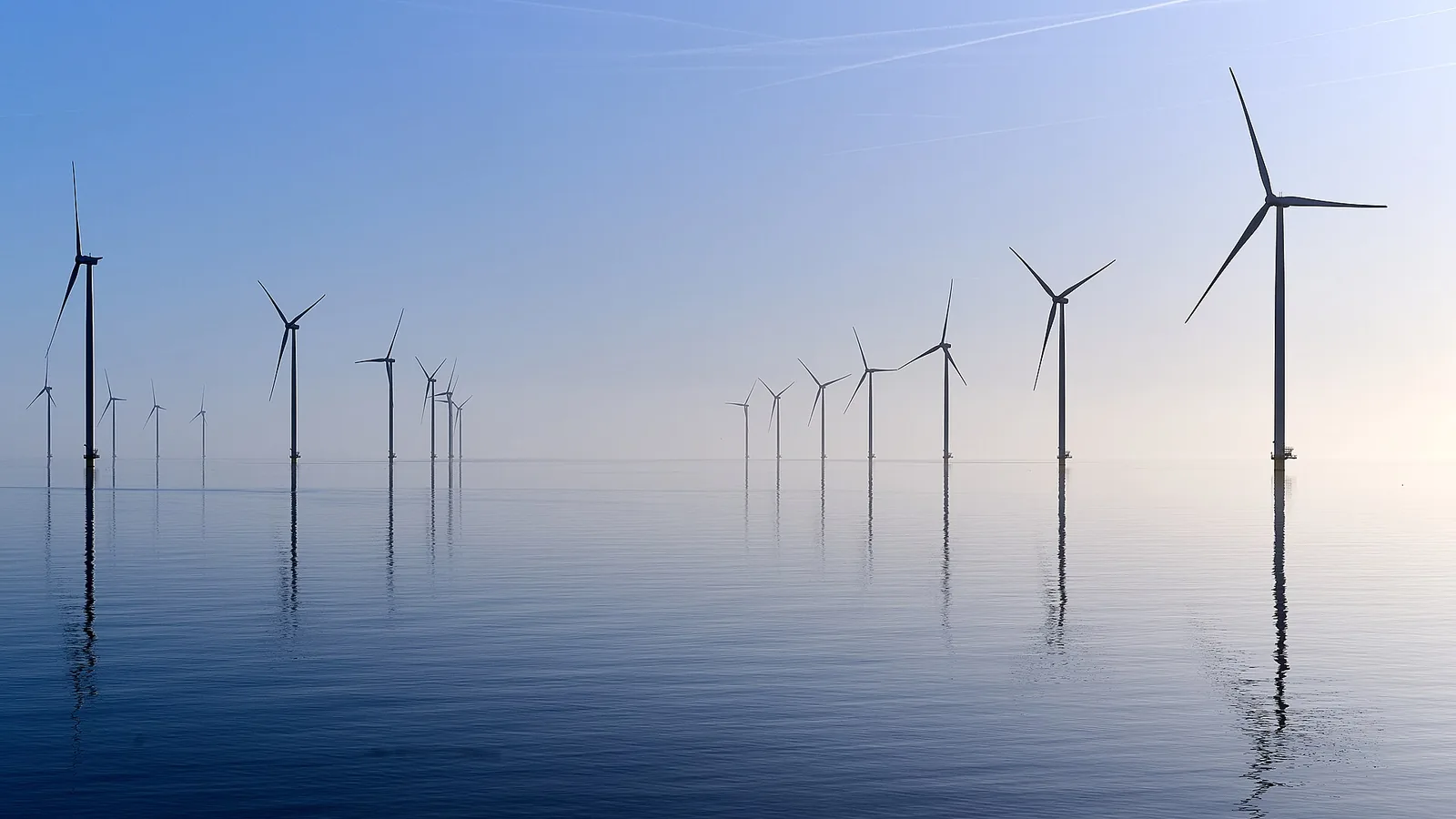
Wind Turbine Generator
What the generator does, the main types, how it works, and the failure modes that send it for repair or rewind.
Request a quoteGet a free quote
Matched to vetted providers in your state. No cost, no obligation.
What the generator does, the main types, how it works, and the failure modes that send it for repair or rewind.
Request a quoteMatched to vetted providers in your state. No cost, no obligation.
The wind turbine generator is the component that actually makes the electricity. Every other part exists to spin it: the blades catch the wind, the shaft and gearbox deliver the rotation, and the generator converts that rotation into current for the grid. This guide explains what it does, the main types, how it works, what sits around it inside the nacelle, and the failure modes that drive most repair work.
The job of the wind turbine generator is a single conversion: mechanical rotation in, electrical power out. The rotor and blades turn a main shaft at a slow speed, perhaps 10 to 20 revolutions per minute on a large turbine. On a geared machine the gearbox steps that up to the hundreds or thousands of revolutions per minute the generator needs. The generator then uses a moving magnetic field and a set of copper windings to produce alternating current. That raw output, usually around 690 volts, is managed by the converter and controller and then raised by a transformer to the voltage the collection network expects. Without a healthy generator the whole turbine produces nothing, which is why a generator fault is treated as a high-priority repair.
Not all generators are built the same way, and the type dictates how the turbine is controlled and how it is maintained. There are three families worth knowing.
The doubly-fed induction generator (DFIG) is the workhorse of the geared fleet. Its stator connects straight to the grid while its wound rotor is fed through slip rings and a partial-scale converter that handles only a fraction of the total power. That partial converter keeps DFIG designs relatively low cost, but the slip rings and brushes are a recognised wear item that needs regular service.
The permanent-magnet synchronous generator (PMSG) replaces the wound, excited rotor with fixed permanent magnets, so there are no rotor windings, slip rings or brushes to wear out. PMSG designs pair with a full-scale converter that processes all of the output, which gives smooth grid behaviour and strong low-wind performance. They appear in both medium-speed geared drivetrains and direct-drive machines.
That leads to the direct-drive versus geared question. A geared turbine uses a gearbox and a smaller, faster generator, so the generator itself is compact but the gearbox becomes a major maintenance item. A direct-drive turbine removes the gearbox entirely and couples the rotor straight to a very large, slow-turning generator, almost always a PMSG with many magnetic poles. Direct-drive cuts out the most failure-prone mechanical stage but puts a heavier, more expensive generator at the top of the tower. Neither is strictly better; the right choice depends on site, platform and the owner's view of lifetime maintenance.
Every generator type relies on the same physics: electromagnetic induction. A magnetic field is set up on the rotating part, either by permanent magnets or by current fed into rotor windings. As the rotor spins, that field sweeps past the copper windings held in the stationary stator, and the moving field induces a voltage in those windings. Connect a load and current flows. The strength of the field, the number of windings and the speed of rotation together set how much power is produced.
The complication is wind. Wind speed varies constantly, so the rotation feeding the generator is never steady. The power converter and controller exist to smooth this out: they adjust the generator's electrical behaviour so it can run across a range of speeds while still delivering clean, grid-compliant current at the right frequency. On a DFIG the converter feeds the rotor to control it; on a PMSG the converter sits in the full output path. Either way, the generator and its electronics work as one system, serviced under condition monitoring so trends in temperature, vibration and current are caught early.
The generator does not sit alone. It is the last link of the drivetrain inside the nacelle, the housing on top of the tower. Ahead of it sit the main shaft and main bearing, the gearbox on a geared machine, and the mechanical brake. A flexible coupling joins the gearbox high-speed shaft to the generator so that small misalignments do not pass straight into the generator bearings. Around the generator are its cooling system, the converter cabinets and the sensors that feed the controller. Because everything is packed into a confined space high above the ground, generator work is planned around access, lifting and, for larger exchanges, crane logistics. The condition of the generator is tightly linked to the gearbox and bearings feeding it, which is why they are serviced together under gearbox, generator and drivetrain repair.
Most generator problems come from a short list of wear points, and knowing them helps owners plan rather than react.
Bearings are the most common. The generator rides on bearings that carry heavy loads and run for years, and they degrade through fatigue, poor lubrication or electrical currents passing through the bearing and pitting the races. A failing bearing shows up first as rising vibration and temperature, then as noise, and if ignored it can seize and cause secondary damage.
Windings are the copper conductors in the stator and, on a DFIG, the rotor. They fail through overheating, contamination, moisture ingress or mechanical movement that abrades the conductors. A winding fault often means a partial repair or a full rewind.
Insulation is the layer that keeps the windings electrically separated, and it ages with every heat cycle. As it degrades the risk of a short rises, so insulation resistance testing is a routine check and failing insulation is a classic trigger for a rewind.
Slip rings and their brushes apply only to DFIG machines, where current must reach the spinning rotor. The rings and brushes wear, build up carbon dust and need periodic cleaning and replacement; neglected slip rings are a frequent cause of DFIG downtime.
Whatever the fault, the response falls into repair, rewind or exchange, all handled under generator repair, rewind and exchange. If you are weighing up when to intervene, our blog on the Australian fleet leaving warranty walks through the planning.
Tell us your turbine platform and the symptoms you are seeing. We match you to independent providers who repair, rewind and exchange wind turbine generators.
Your enquiry is sent to vetted service partners who may contact you directly. We never charge owners or asset managers.