When repair gives way to exchange
Some faults cannot be fixed uptower. A seized main bearing, a failed gearbox or a cracked blade reaches a point where the only sound decision is to take the component down and replace it.
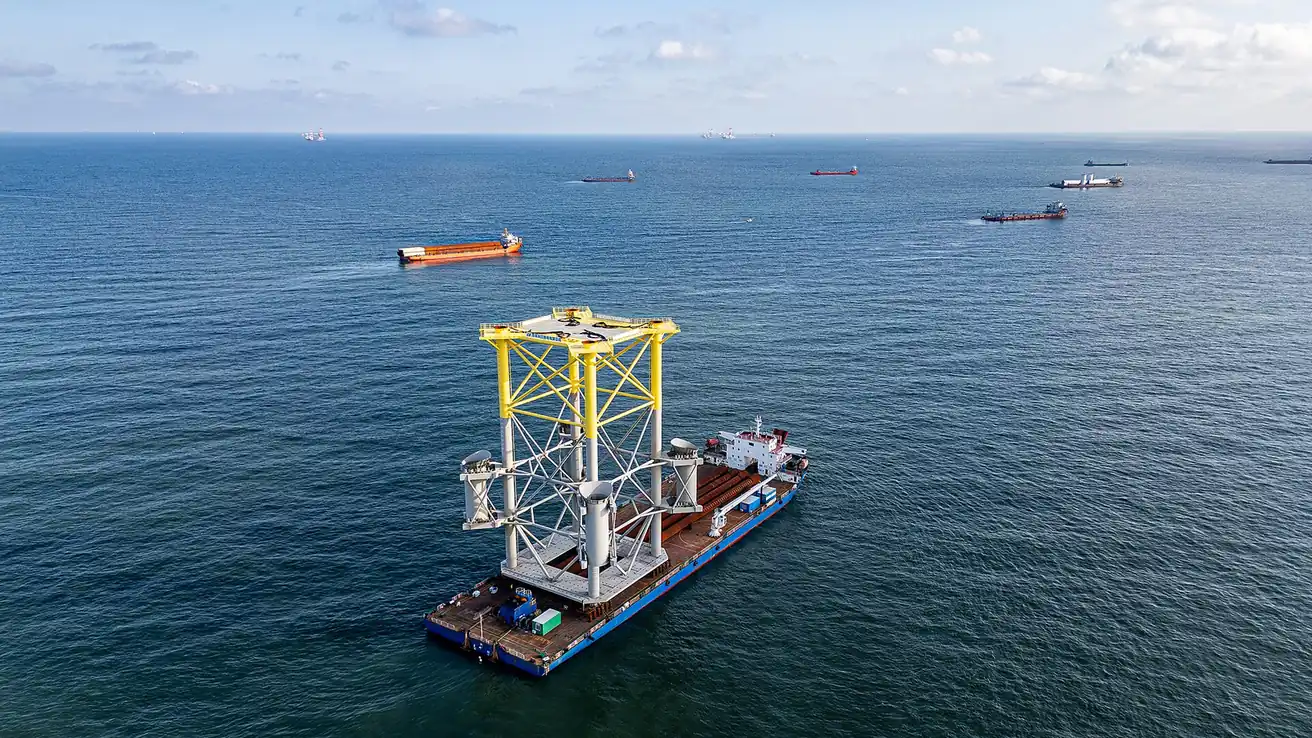
Main component exchange is the heaviest, most logistically demanding work on a wind farm. It brings together wind turbine blade transport, heavy lifting, specialist rigging and installation and commissioning, often inside a single weather window. The providers we match plan the whole sequence so a turbine comes back online quickly and safely, and so a single mobilisation does as much work as possible.
Blade exchange and emergency blade removal
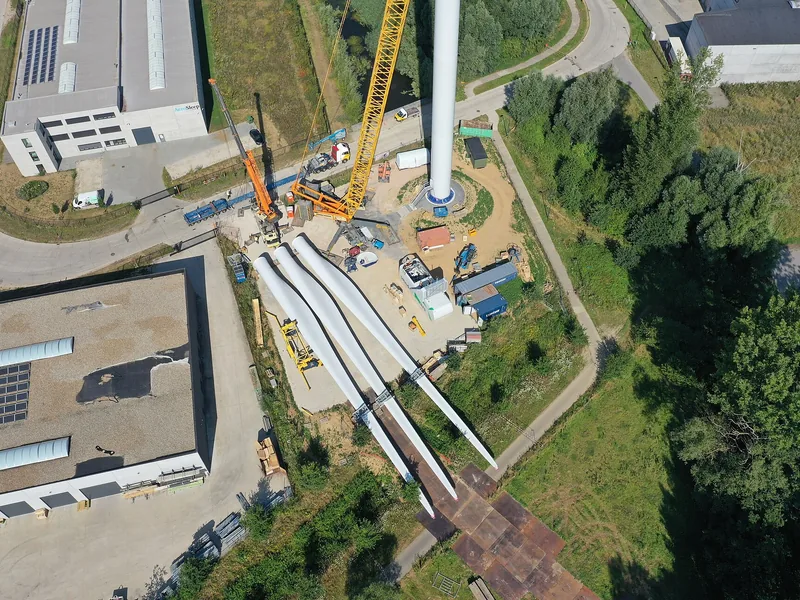
A damaged or dropped blade is both a production loss and a safety hazard. Blade exchange is wind-sensitive and precise: the lift has to be timed to a calm window, the replacement blade transported to site in one piece, and the rigging matched to the platform. For urgent cases, the crews we match can mobilise emergency blade removal to make a site safe before a planned replacement follows. Blade damage that is caught earlier through blade repair often avoids a full exchange altogether.
Gearbox, generator and main bearing exchange
Drivetrain exchanges are the classic big-crane jobs. A failed gearbox or generator is lifted out of the nacelle and a replacement lifted in, while a main bearing exchange is one of the most demanding lifts of all. Where a fault is caught early through monitoring, a gearbox repair or an uptower drivetrain intervention can defer or avoid a full exchange, which is why planning and condition data matter so much to the final cost.
Crane-less and uptower exchange systems
Not every exchange needs a crawler crane. Crane-less exchange systems, self-hoisting rigs and tower-climbing tools lift a gearbox, generator or main bearing using equipment mounted on the nacelle or the tower itself. They come into their own on remote sites, on soft ground where crane pads are costly, and where mobilising a main crane is uneconomic for a single turbine. The providers we match run both crawler cranes and self-hoisting systems, so the method is chosen to suit the job rather than the other way around.
Lift planning, transport and commissioning
A successful exchange is mostly planning. Crane selection, ground-bearing pressure and crane pads, exclusion zones, wind limits and the transport route for an oversized component all have to line up before anyone lifts a load. Heavy transport and logistics move the replacement to site, and installation and commissioning support brings the turbine back to full output. Grouping an exchange with scheduled crane hire keeps mobilisation costs down, and at a fleet's end of life the same crews handle decommissioning and repowering.
Wind Turbine Services is a sourcing and comparison service and does not perform component exchange itself. Enquiries are passed to independent service partners who contact you directly. There is no cost or obligation to owners and asset managers.
Frequently asked questions
What is wind turbine main component exchange?
Main component exchange is the removal and replacement of a turbine's largest assemblies, the blades, gearbox, generator and main bearing, when repair in situ is no longer viable. It combines heavy lift planning, specialist rigging, logistics and installation and commissioning support so an owner can return a turbine to service with minimal lost generation.
Can a main component be exchanged without a large crane?
Yes. Crane-less exchange systems, also called self-hoisting or uptower tools, lift a gearbox, generator or main bearing using nacelle-mounted or tower-climbing equipment. They suit remote sites, soft ground or jobs where a main crane cannot be mobilised economically, and we match owners to providers who run both crawler cranes and self-hoisting systems.
How quickly can an emergency blade removal be arranged?
It depends on crane and transport availability and the state. For a damaged or dropped blade that poses a safety risk, the specialists we match can often mobilise urgently. Tell us the platform, blade length and site access and we route your enquiry to crews with suitable lifting capacity nearby.
What planning is needed before a heavy lift?
A lift plan covering crane selection, ground-bearing pressure and crane pads, exclusion zones, weather and wind limits, and the transport route for the replacement component. Blade exchange in particular needs careful lift planning because of the length and the wind sensitivity of the lift.
Who performs the exchange and the commissioning?
Heavy-lift contractors, specialist rigging crews, transport and logistics companies and OEM or independent service technicians. Wind Turbine Services is a sourcing service: we route your enquiry to vetted providers who cover your platform and state, and they contact you directly.