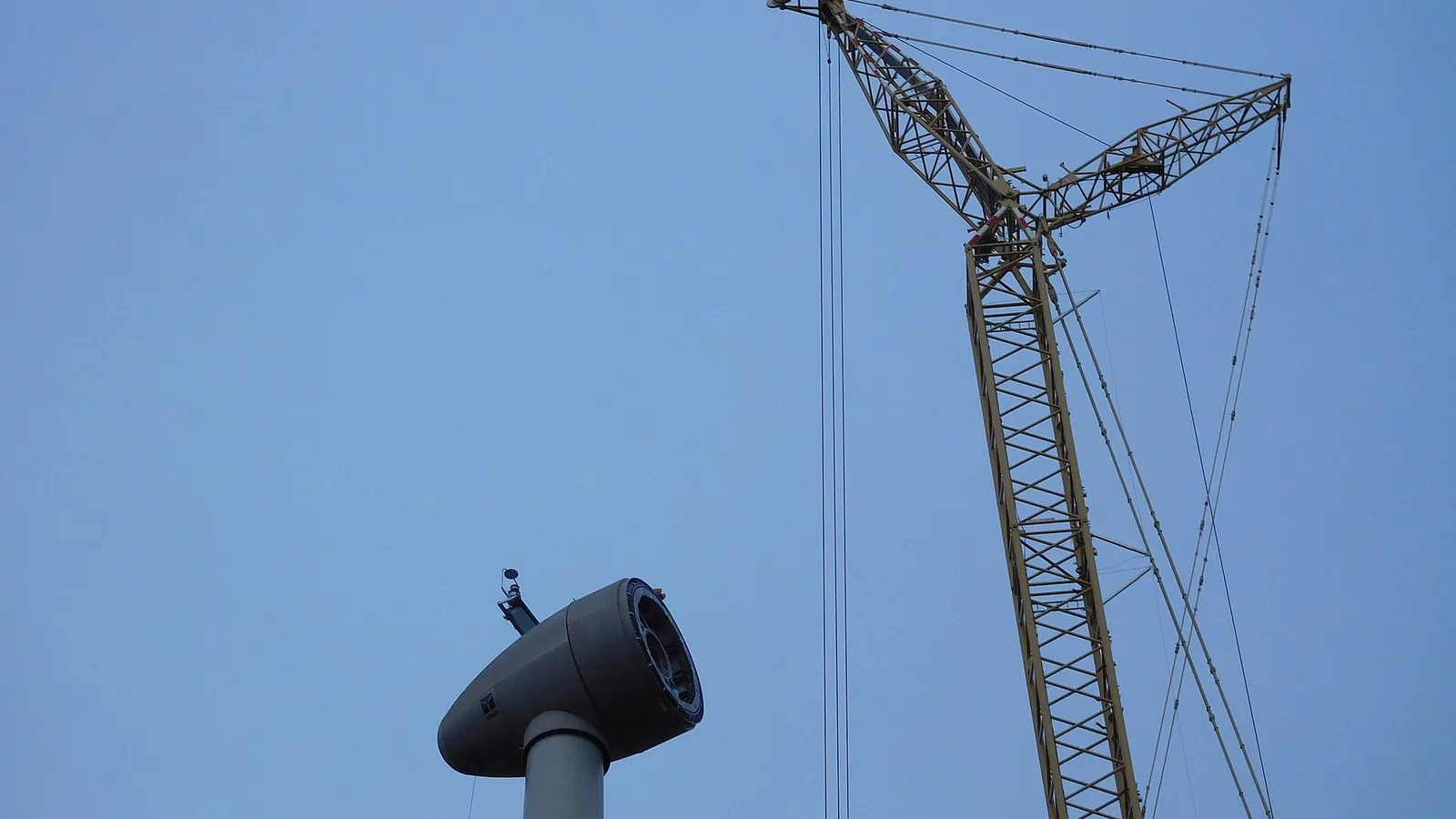
Wind Turbine Nacelle
What the nacelle is, every component inside it, and the services that keep the drivetrain, yaw and controls running.
Request a quoteGet a free quote
Matched to vetted providers in your state. No cost, no obligation.
What the nacelle is, every component inside it, and the services that keep the drivetrain, yaw and controls running.
Request a quoteMatched to vetted providers in your state. No cost, no obligation.
The nacelle wind turbine assembly is the engine room of the machine. Perched at hub height on top of the tower, the wind turbine nacelle houses almost everything that converts spinning blades into grid electricity, which is why so much major maintenance happens inside it.
The nacelle is the large box-shaped housing mounted on top of the tower, directly behind the rotor. It sits on the yaw bearing so it can rotate to face the wind, and it carries the entire drivetrain and the electrical systems that generate power. On a horizontal-axis turbine the wind turbine nacelle is where the mechanical energy of the blades becomes electrical energy for the grid. Everything above the tower flange, apart from the blades and hub, lives inside or on top of this housing, which is why owners often describe the nacelle as the heart of the machine.
Externally the nacelle is a weatherproof composite cover, usually glass-reinforced plastic, that keeps rain, dust and salt air out. On the roof sit the anemometer and wind vane that tell the controller where the wind is coming from, along with a rated hatch for crane access. Structural, cover and safety-system work on this assembly falls under tower, foundation and nacelle services.
Open the nacelle and you are looking at a dense, carefully arranged train of machinery. Each item has a job, and each has its own wear pattern and service path.
Bearing, gear, shaft and generator work is handled under gearbox, generator and drivetrain repair. The yaw drives and yaw bearing are serviced under pitch and yaw systems, while the converter, switchgear and controller sit under electrical and control systems.
Reaching the nacelle is a serious task. Technicians climb the internal tower ladder or ride a service lift the full hub height, then pass through a hatch onto the machine deck. Because the space is enclosed, high and full of moving and energised equipment, every entry runs on fall-arrest systems, lock-out and tag-out of the drivetrain, confined-space awareness and a planned rescue. A roof hatch, rated for load, lets a crane lower or lift major components when a part has to come out. Crews should hold current Global Wind Organisation working-at-height, first-aid and manual-handling tickets before they set foot inside, and hot-work or electrical tasks add their own permits on top.
Most nacelle call-outs trace back to a short list of issues. Main-bearing and gearbox bearing wear top the list, often flagged early by vibration and oil-debris monitoring. Generator bearing and winding faults are close behind. Yaw drives and the yaw bearing wear with constant repositioning, and a sticking yaw can misalign the rotor and quietly shed energy. Converter and control faults cause nuisance trips and derating, while blocked or failed cooling lets the gearbox, generator or converter overheat. Water ingress through a cracked cover or a failed seal corrodes electrics and bearings below. Catching these early through inspection and scheduled maintenance is far cheaper than a crane-assisted main component exchange.
The nacelle cover is almost always a glass-reinforced plastic composite, and like any composite it can crack, delaminate or leak at joints and hatches after years of weather and flex. The good news is that a damaged cover rarely needs a full replacement. Specialist crews repair it in place with laminate patching, joint and hatch resealing, and recoating, restoring the weather seal that protects the drivetrain and electrics inside. Prompt cover repair keeps rain and salt air off the machinery below and is a core part of tower, foundation and nacelle services. If you are weighing up when to intervene across an ageing fleet, our blog on the Australian fleet leaving warranty walks through the planning.
Tell us the component and your turbine platform. We match you to independent providers who service the nacelle, drivetrain and controls.
Your enquiry is sent to vetted service partners who may contact you directly. We never charge owners or asset managers.