Matched to vetted providers in your state. No cost, no obligation.
The wind turbine blade is the single component that turns moving air into rotation, and the most exposed part of the whole machine. This guide explains blade length, weight, materials, types and lifespan, covers the common blade damage owners deal with, and links each one to the repair and protection service that addresses it.
Blade cross-section: spar caps, shear webs, leading and trailing edges.
50 to 90 mTypical blade length
10 to 25 tTypical blade weight
GFRP / CFRPMain materials
20 to 25 yrDesign lifespan
Wind turbine blade length
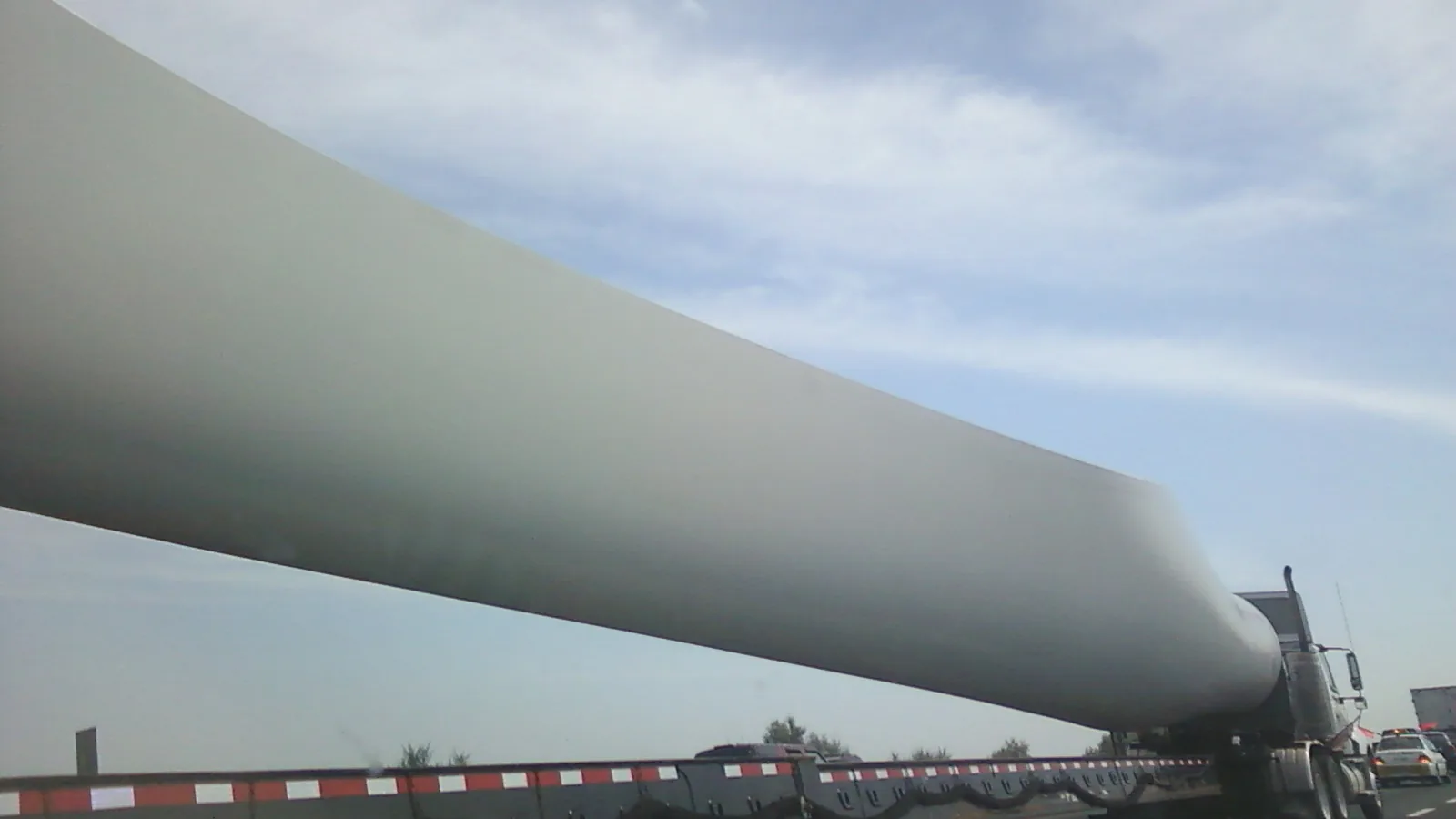
Blade length is the headline number for any modern turbine, because it sets the rotor diameter and therefore the area the rotor sweeps. Utility-scale wind turbine blades commonly run from about 50 metres on older onshore machines to 80 or 90 metres on the largest onshore and offshore platforms. A 75-metre blade produces a rotor roughly 150 metres across. Longer blades sweep more air at a given wind speed, which is why length has grown with every turbine generation. That same growth is what makes blade transport, crane lifts and blade repair access harder and more specialised each year.
Wind turbine blade weight
A single utility-scale blade typically weighs between 10 and 25 tonnes. A 50-metre blade sits near the lower end, while 80 to 90-metre blades on the biggest machines reach the top of that range. Weight matters for two reasons: it drives the loads carried by the hub, pitch bearings and main shaft, and it dictates the size of crane needed for any blade exchange. Manufacturers fight weight growth with carbon-fibre spar caps and optimised shell layups, because a blade that gets heavier faster than it gets longer puts more strain on every component behind it.
Wind turbine blade materials
Blades are composite structures built mainly from fibreglass (glass-fibre reinforced polymer, or GFRP) laminates. The glass fibres are laid up and bonded with an epoxy or polyester resin that sets into a stiff, strong shell. In longer blades, carbon fibre (CFRP) is used in the spar caps, the load-bearing strips that run the length of the blade, because it adds stiffness without adding much weight. The shells are usually a sandwich panel with a lightweight balsa wood or foam core between two laminate skins, which keeps the large panels rigid without filling them with solid laminate. A gelcoat or protective coating finishes the outer surface and takes the first hit from rain and grit.
Wind turbine blade types
Almost all large turbines use three-bladed, upwind, horizontal-axis rotors, a layout that balances efficiency, loads and cost better than one or two-bladed designs. Within that, blades differ by construction: most are built in two shells bonded along the leading and trailing edges around internal shear webs, while some use a one-shot or integrated-spar approach. Blades also differ by whether the spar caps are glass or carbon, and by tip design, with serrated trailing edges and winglets used to cut noise and boost aerodynamic performance. All of these still rely on the same maintenance paths, from inspection to lightning protection.
Wind turbine blade lifespan
Blades are designed for a service life of 20 to 25 years, the same design life as the turbine. Whether a blade reaches that span depends on how well it is maintained: leading-edge erosion, lightning strikes, delamination and fatigue cracking can all shorten it if they go unaddressed. Regular inspection and timely repair are what keep a blade on track for its full life, and many are extended beyond it under formal life-extension assessments. For context on the wave of Australian turbines now ageing out of warranty, see our blog on leading-edge erosion. At true end of life, blades move into decommissioning and repowering, where recycling of composite material is the growing focus.
Common wind turbine blade damage
The most common blade problem is leading-edge erosion: years of rain, dust and insect impact slowly roughen and strip the leading edge, which quietly shaves off annual energy production before it becomes a structural concern. The fix and the prevention both sit under leading-edge protection. Delamination, where the laminate layers separate, and surface or structural cracks from fatigue are the next most common, often starting small and spreading if left alone. Lightning strikes at the tip can blow out laminate and damage the down-conductor system, which is why a sound lightning protection path matters. Bond-line failures along the trailing edge round out the list. Caught early through inspection, nearly all of these are repairable under blade repair rather than requiring a full blade exchange.
Wind Turbine Services is an independent sourcing and comparison service. This guide is general information, not engineering advice. Diagrams are illustrative and not to scale.
Frequently asked questions
How long does a wind turbine blade last?
Most modern wind turbine blades are designed for a service life of 20 to 25 years, matching the design life of the turbine itself. Reaching that span depends on condition: leading-edge erosion, lightning strikes, delamination and fatigue cracking can shorten it, which is why regular inspection and timely repair are so important. With good leading-edge protection and scheduled maintenance, many blades run the full design life and some are extended under life-extension assessments.
How much does a wind turbine blade weigh?
A single utility-scale wind turbine blade typically weighs between 10 and 25 tonnes, depending on its length and construction. A blade around 50 metres sits near the lower end, while blades of 80 to 90 metres on the largest onshore and offshore machines reach the upper end. Lighter carbon-fibre spar caps are one of the main ways manufacturers keep weight down as blades grow longer.
What is the length of a wind turbine blade?
Utility-scale wind turbine blades commonly run from about 50 metres to 90 metres. The blade length sets the rotor diameter, so a 75-metre blade gives a rotor of roughly 150 metres. Longer blades sweep more area and capture more energy at a given wind speed, which is the main reason blade length has grown steadily across each turbine generation.
What are wind turbine blades made of?
Blades are built mainly from fibreglass (glass-fibre reinforced polymer) laminates bonded with epoxy or polyester resin. Carbon fibre is used in the spar caps of longer blades to add stiffness without weight, and lightweight balsa wood or foam forms the core of the sandwich panels in the shells. A gelcoat or protective coating shields the outer surface from the weather.
What are the most common wind turbine blade damage types?
The most common issues are leading-edge erosion from rain, dust and insect impact, delamination where laminate layers separate, surface and structural cracks from fatigue, and lightning damage at the blade tip. Bond-line failures and trailing-edge splits also occur. Early detection through inspection keeps most of these small and repairable rather than letting them grow into major faults.
Need a blade inspected or repaired?
Tell us the turbine platform and the blade issue you are seeing. We match you to independent providers who repair and protect blades.
Your enquiry is sent to vetted service partners who may contact you directly. We never charge owners or asset managers.