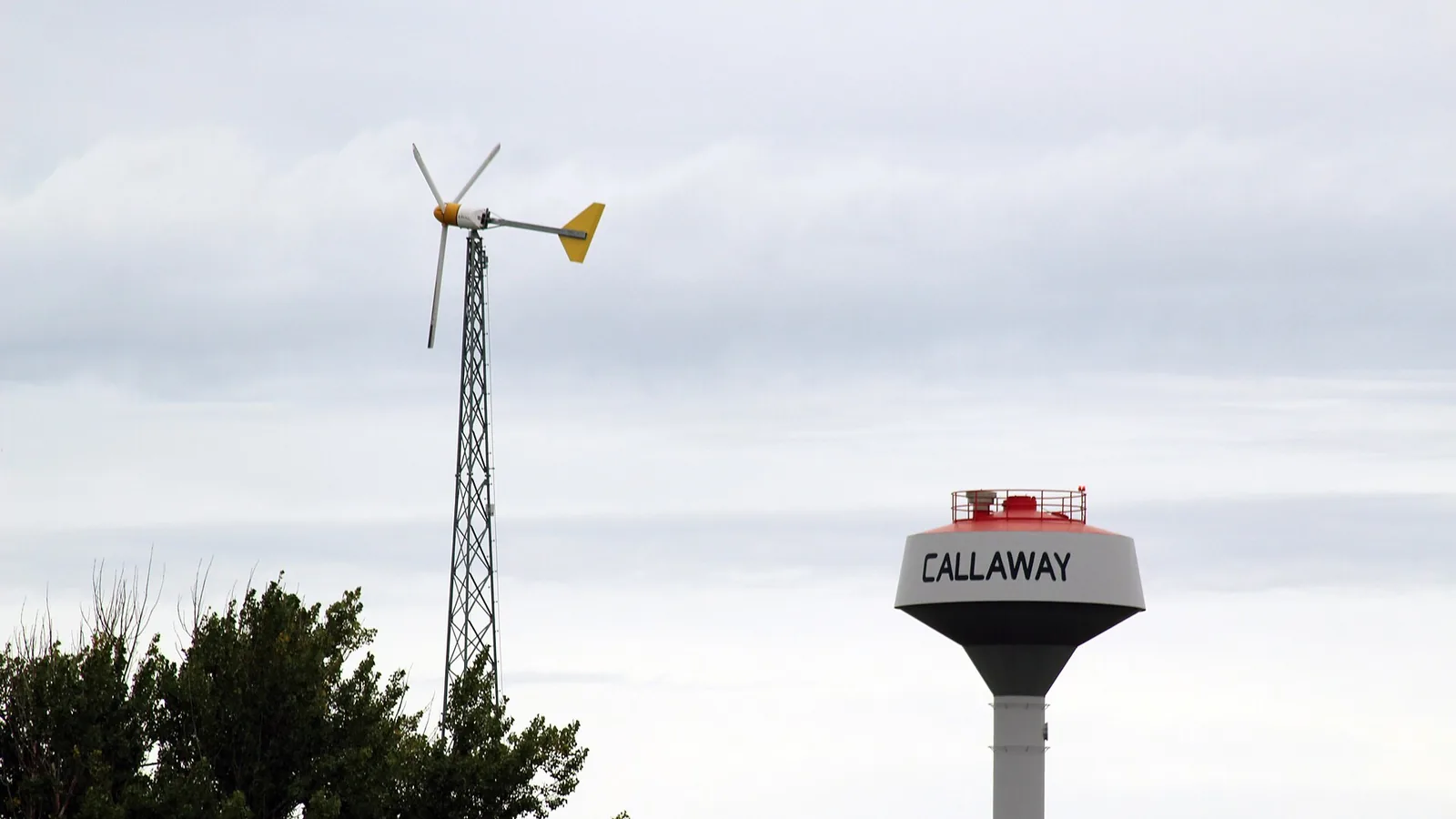
Wind Turbine Tower
How the tower that carries the nacelle is built, bolted, accessed and protected, and the services that keep it standing.
Request a quoteGet a free quote
Matched to vetted providers in your state. No cost, no obligation.
How the tower that carries the nacelle is built, bolted, accessed and protected, and the services that keep it standing.
Request a quoteMatched to vetted providers in your state. No cost, no obligation.
The wind turbine tower is the tall structure that raises the rotor and nacelle to the heights where wind is stronger and steadier. It carries every operating load down to the foundation, so its type, height, bolted joints, internal access and corrosion protection all matter to both output and safety.
Four tower types cover the fleet. Tubular steel towers are the most common: rolled steel cans, tapering towards the top, welded into sections and bolted together on site. They are quick to erect and well understood, which is why most Australian turbines use them. Concrete towers, cast as precast segments or slip-formed on site, suit very tall designs where steel cans would be too wide for road transport. Hybrid towers combine a concrete lower section with a tubular steel upper, pairing a stiff, heavy base with a lighter, transportable top. Lattice towers, an open bolted framework, use far less steel and are easy to transport in pieces, but they need more bolt inspection and are now rare on large machines. The choice is driven by hub height, transport access to site and the local cost of steel against concrete.
Hub height is one of the biggest levers on a turbine's output. Wind speed rises with height above the ground, and because energy in the wind scales with the cube of wind speed, even a modest lift in hub height can add several per cent to annual energy production. That is why towers have grown from around 80 metres towards 150 metres and beyond. The trade-off is weight and load: a taller tower is heavier, costs more in steel or concrete, and transmits larger overturning moments into the foundation, so the whole structure is sized together rather than in isolation.
A tubular tower arrives on site as separate sections, each ending in a thick ring called a flange. Sections are stacked and joined by bolting adjacent flanges together with high-strength pretensioned bolts, and the base section bolts to the foundation ring. Each flange typically carries 100 or more bolts, and every one is tightened to a specified tension so the joint stays clamped under the cyclic bending the tower sees in service. If bolts lose tension, the joint can work loose and fatigue, which is why bolt tensioning is a core scheduled task. Checking and retensioning tower and foundation bolts, along with the yaw bearing bolts, falls under tower, foundation and nacelle services.
Inside the tower is a vertical access route from the base door to the nacelle. Every tower has an internal ladder fitted with a fall-arrest rail, and taller towers add a service lift that carries technicians and light tools most of the way up, cutting fatigue and climb time on a 100-metre-plus tower. Platforms break the climb into stages, cabling and the power converter often run up the inside, and the base houses switchgear and the main door. Keeping ladders, lift, platforms and lighting serviceable is part of routine tower maintenance, and the structure itself is covered during inspection.
A steel tower lives outdoors for decades, so corrosion protection is not optional. The steel is blasted, primed and finished with a multi-coat paint system, and many towers now carry a metallised layer of thermal-sprayed zinc or zinc-aluminium under the paint for longer life. Coastal and marine sites, where salt accelerates attack, use heavier systems again. Over time, coatings chip, rust bleeds from flange joints, and the external surface needs touch-up or full recoating before damage reaches bare steel. Coating repair, flange sealing and exterior cleaning sit under tower and foundation services, and surface washing is handled through turbine cleaning.
Working on a tower means working at height, which is the single most safety-critical part of wind service. Technicians are GWO trained in working at height and rescue, wear a full-body harness clipped to the ladder fall-arrest rail at all times, and never climb without a rescue plan and a second person aware of the climb. Safety systems inside the tower, the fall-arrest rail, lift interlocks, anchor points and emergency descent gear, are inspected and certified on their own schedule. Getting those systems right is why safety-system checks are bundled into tower, foundation and nacelle services rather than left to chance.
Tell us whether you need bolt tensioning, coatings or safety-system work and your turbine platform. We match you to independent providers who service towers.
Your enquiry is sent to vetted service partners who may contact you directly. We never charge owners or asset managers.